149 tracked claims have a 2030 deadline. Every one gets a verdict when its date arrives: called it, half right, or missed.
“I have another long-term bet: I bet @codinghorror $10k that by January 1st, 2030, completely autonomous self-driving cars meeting SAE J3016 level 5 will be commercially available for passenger use in major cities.”

Consulting CTO at Meta's Oculus VR; co-founder of id Software
$10,000 bet against Jeff Atwood, payable to the winner's chosen 501(c)(3); 'major cities' is defined as any of the ten most populous US cities, and SAE Level 5 requires all driving tasks under all conditions with zero human attention.
“John Carmack and I have initiated a friendly bet of $10,000 to the 501(c)(3) charity of the winner's choice: By January 1st, 2030, completely autonomous self-driving cars meeting SAE J3016 level 5 will be commercially available for passenger use in major cities. I am betting against, and John is betting for... To be clear, I am betting against because I think everyone is underestimating how difficult fully autonomous driving really is. (By 'major cities' we mean any of the top 10 most populous cities in the United States of America.)”
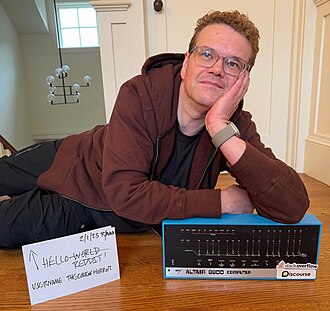
Co-founder of Stack Overflow and Discourse
Per the agreed terms, a passenger must be able to enter the vehicle, select a destination and give zero attention for the journey, in one of the ten most populous US cities, before January 1, 2030.
“Bryan Caplan pays Eliezer $100 now, in exchange for $200 CPI-adjusted from Eliezer if the world has not been ended by nonaligned AI before 12:00am GMT on January 1st, 2030.”
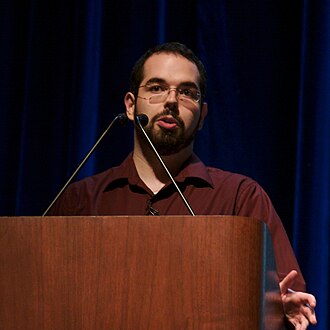
Co-founder and Research Fellow, Machine Intelligence Research Institute
Bet terms were drafted in the first person by Yudkowsky and prepaid by Caplan; note that Yudkowsky has argued the prepayment structure makes the implied odds a poor read of his actual credence. Resolves 1 January 2030.
“My end-of-the-world bet with @ESYudkowsky is now in its NINTH year. I WILL win on January 1, 2030. Disagree? I'll bet anyone with a public reputation at 10:1. How CAN you bet on the end of the world? Simple: The optimist prepays the pessimist.”

Professor of Economics, George Mason University
Said Mar 24, 2026Deadline Jan 1, 2030Bryan Caplan on X, 24 March 2026 Restates Caplan's side of the January 2017 bet in which he prepaid Eliezer Yudkowsky $100 for $200 CPI-adjusted if the world has not been ended by nonaligned AI before 12:00am GMT on 1 January 2030.
“The shelf life of the current [LLM] paradigm is fairly short, probably three to five years. I think within five years, nobody in their right mind would use them anymore, at least not as the central component of AI systems.”

Chief AI Scientist, Meta (at time of statement); Turing Award laureate
Deadline is January 2030. As of 2026, LLMs remain the central component of essentially all deployed AI systems; LeCun left Meta in late 2025 and founded AMI Labs to pursue world-model architectures instead.
“Salesforce announces a new long-term revenue target of $60B+ by fiscal year 2030, excluding Informatica — implying a 10%+ organic FY26 to FY30 compounded annual growth rate, up from $37.9 billion in fiscal 2025, with growth led by its Agentforce AI platform.”

Investor Day guidance issued at Dreamforce 2025
Salesforce subsequently raised the FY30 target to $63 billion (including Informatica) in February 2026; fiscal 2030 ends January 31, 2030.
“Salesforce expects revenue of more than $63 billion for its fiscal year ending in January 2030 — above the roughly $59-61 billion analysts had modeled — as AI agents and Agentforce drive growth.”
RWPresident, Chief Operating and Financial Officer, Salesforce
Salesforce first lifted the FY30 target from $60B+ to $63 billion (including Informatica) with its Q4 FY26 results in February 2026; Washington reaffirmed and detailed it at Dreamforce in September 2026. Fiscal 2030 ends January 31, 2030.
“India is likely to develop its own advanced computing chipsets — GPUs — within the next three to five years.”

India's Union Minister of Electronics and Information Technology
Government sources have since indicated Indian-designed GPUs may be technology-demonstration ready around 2025 with production readiness projected for 2029, keeping the three-to-five-year claim live.
“Humanoid robots will be a common sight in manufacturing facilities in less than five years: "When, literally, humanoid robots are wandering around, which is not five years away. This is not five-years-away problem, this is a few-years-away problem." They should go to factories first, because the domain is much more guard-railed and the use case much more specific.”

Founder and CEO of NVIDIA
“It costs £3.4 billion to modernise NHS IT systems — including using AI to cut form-filling and speed up diagnosis — but it helps unlock £35 billion of savings, 10 times that amount, over the next Parliament.”

Chancellor of the Exchequer
The £35 billion is framed as cumulative NHS productivity savings from 2025/26 to 2029/30, so it cannot be judged before the end of the 2029/30 financial year; the plan's delivery has since been reshaped by the change of government.
“Within 3 to 5 years we'll have what is called general intelligence, AGI, which can be defined as a system that is as smart as the smartest mathematician, physicist, artist, writer, thinker, politician. I call this the San Francisco consensus, because everyone who believes this is in San Francisco.”

Former CEO and Chairman of Google; Chairman of the Special Competitive Studies Project
Outer bound of the 3–5 year window falls in April 2030. Schmidt has since restated a similar timeline (AGI around 2028–2030, superintelligence within a decade) at the RAISE Summit in Paris in July 2025.
“AI could wipe out half of all entry-level white-collar jobs — in tech, finance, law and consulting — and spike US unemployment to 10-20% in the next one to five years.”

Co-founder and CEO, Anthropic
Said May 28, 2025Deadline May 28, 2030Axios interview, 28 May 2025 The outer bound of the stated window is May 2030; US unemployment has so far remained far below the 10-20% range.
“There is this whole spectrum of crazy futures. But the one that I feel we're almost guaranteed to get — this is a strong statement to make — is one where, at the very least, you get a drop in white collar workers at some point in the next five years. I think it's very likely in two, but it seems almost overdetermined in five.”

AI researcher, Anthropic (previously Google DeepMind)
Douglas argued the decline would happen even if algorithmic progress stalled, because existing models are already good enough for many white-collar tasks given the right data; Trenton Bricken agreed with the five-year timeline.
“We expect Oracle Cloud Infrastructure revenue to grow 77% to $18 billion this fiscal year—and then increase to $32 billion, $73 billion, $114 billion, and $144 billion over the subsequent four years.”
The FY2026 waypoint looks roughly on track: quarterly IaaS revenue ran $3.3B, $4.1B and $4.9B in Q1–Q3 FY26, with Q1 FY27 IaaS up 121% year-over-year. The $144 billion FY2030 figure resolves in May 2030.
“If the observed trends continue, the leading AI supercomputer in June 2030 will need 2 million AI chips, cost $200 billion, and require 9 GW of power — the equivalent of 9 nuclear reactors, a scale beyond any existing industrial facility.”
KPResearcher, Georgetown University; lead author of Epoch AI's 'Trends in AI Supercomputers'
Trend extrapolation; the largest reported system at publication (xAI's Colossus) used 200,000 chips, cost ~$7B and drew ~300 MW.
“It is reasonable to predict that we are going to have specialized AI savants in every field within five years. Now imagine their capabilities and how they will change society and our day-to-day lives.”
Former CEO and Executive Chairman of Google; co-founder of Schmidt Sciences
Made alongside Schmidt's argument that electricity, not chips, is AI's natural limit; distinct from his separate 'AGI in three to five years' claim in that it concerns domain-specialized savants rather than general intelligence.
“The @xAI goal is 50 million in units of H100 equivalent-AI compute (but much better power-efficiency) online within 5 years.”

Founder and CEO of xAI; CEO of Tesla and SpaceX; owner of X
For scale, 50 million H100-equivalents at H100 power draw would imply roughly 35 GW; xAI's largest site, Colossus 2, was estimated by Epoch AI at about 946 MW of IT power and roughly 1.1 million H100-equivalents as of September 2026.
“If any of you invested in the BPO industry or IT services industry, almost certainly, or customer support, most of that will disappear in the next five years, and those are very large segments today.”
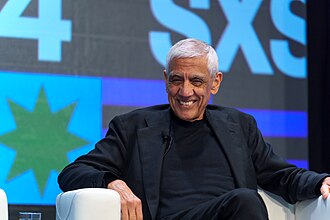
Founder, Khosla Ventures; co-founder of Sun Microsystems; early OpenAI investor
Five-year horizon runs to late 2030; IT services, BPO and customer support remain very large employment segments today.
“xAI will have more AI compute than everyone else combined in <5 years.”
Founder and CEO of xAI; CEO of Tesla and SpaceX; owner of X
Posted in response to SemiAnalysis compute rankings; days later Musk announced a third Memphis building taking the Colossus site toward 2 GW, while Epoch AI's tracked 86 AI data centers totalled about 13 GW of IT power as of September 2026.
“We expect to... grow to hundreds of billions [in annualized revenue] by 2030. We are looking at commitments of about $1.4 trillion over the next 8 years.”
Said Nov 6, 2025Deadline Dec 31, 2030Sam Altman post on X, 6 November 2025 Open until end of 2030; OpenAI's run rate was reported above $40 billion in August 2026, so the trajectory is early but the target requires roughly another order of magnitude.
“By 2030, you get the trillion-dollar cluster using 100 gigawatts, over 20% of US electricity production. That's 100 million H100 equivalents.”
LAFormer OpenAI Superalignment researcher; founder of the AGI-focused investment firm Situational Awareness LP
Target is end of 2030.
“Klarna's headcount will fall from about 3,000 to under 2,000 by 2030 as AI scales across operations: "I want to be honest about the fact that I do think there's going to be a very big shift... it's going to be a lot of turmoil in this."”
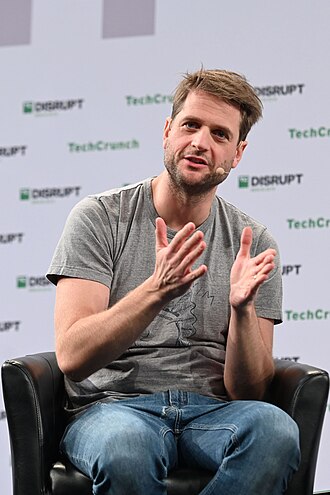
Co-founder and CEO, Klarna
Resolves on Klarna's reported headcount at end-2030; the company has already gone from roughly 7,000 to about 3,000 employees through cuts and unreplaced attrition.
“AI infrastructure spending will reach $3 trillion to $4 trillion by the end of the decade: 'As the AI revolution went into full steam... the capex spend has doubled to $600 billion per year. There's five years between now and the end of the decade, and $600 billion only represents the top four hyperscalers.'”
Co-founder and CEO, NVIDIA
Huang reiterated the same $3–4 trillion 2030 forecast at the Goldman Sachs Communacopia + Technology Conference on September 10, 2026, citing a new layer of computing and the end of Moore's Law.
“Almost certainly within the next five years, any economically valuable job humans can do, AI will be able to do 80% of it — with a few exceptions, like heart surgery or brain surgery.”
Founder, Khosla Ventures; early OpenAI investor
Khosla framed the near term (to 2030) as showing up mainly as productivity gains, with more radical labor displacement after that.
“95% [of code] is going to be AI generated [within five years]. Very little is going to be line by line human-written code. Now that doesn't mean that the AI is doing the software engineering job — authorship is still going to be human.”
KSChief Technology Officer, Microsoft
Five-year horizon from March 2025 puts resolution at 2030; measured against the share of newly written code that is AI-generated.
“ARC-4 is in the works, to be released early 2027. ARC-5 is also planned. The final ARC will probably be 6-7. The point is to keep making benchmarks until it is no longer possible to propose something that humans can do and AI can't. AGI ~2030.”
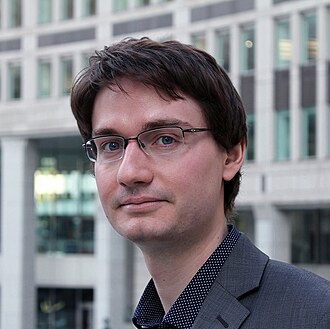
Co-founder, ARC Prize Foundation and Ndea; creator of Keras
Said Feb 12, 2026Deadline Dec 31, 2030X post by @fchollet, February 12, 2026 Notable because Chollet is widely cast as an AGI skeptic; the post drew attention (including from OpenAI's Noam Brown) for putting his AGI estimate within about five years.
“Will the AI think it has reached AGI by 2030? I would say we will just fall short of that timeline, so I think it'll take a bit longer... I don't think we'll quite get there by 2030, so my sense is it's slightly after that — but by 2030 there'll be such dramatic progress, we'll be dealing with the consequences of that progress in a big way.”
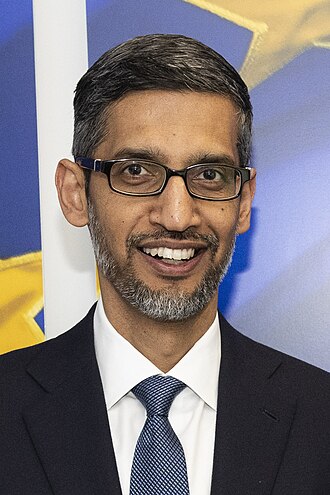
CEO of Google and Alphabet
Notably more conservative than Google DeepMind's own Demis Hassabis and Sergey Brin, who both pointed to roughly 2030; resolves at the end of 2030.
“I think by 2030, maybe even sooner, we will have more than one billion software developers on GitHub. Think about that: 10 percent of the world's population will not only control a computer but will also be able to create software just as if they were riding a bicycle.”
TDThen-CEO of GitHub (Microsoft)
Resolvable against GitHub's own reported user counts at the end of 2030; GitHub had roughly 100 million developers when the prediction was made. Dohmke stepped down as GitHub CEO in 2025.
“AEP expects to interconnect 24 gigawatts of new load by 2030 — 18 gigawatts of it data centers, all backed by signed customer agreements — and will raise its five-year capital plan from $54 billion to about $70 billion to serve it: 'Demand for power is growing at a pace I have not seen in my 45-year energy career.'”
BFPresident & CEO, American Electric Power (AEP)
Tracking: AEP subsequently raised its capital plan to about $72 billion (Oct 2025) and $78 billion, and its contracted incremental load by 2030 to 63 GW (Q1 2026); the load itself resolves at end-2030.
“Following 7 gigawatts of new load agreements signed during the first quarter, primarily in Ohio and Texas, AEP's incremental load is expected to grow to 63 GW by 2030 — up from 56 GW a quarter earlier, nearly 90% of it data centers — backed by signed agreements with well-capitalized industrial customers, hyperscalers and data centers.”
BFPresident & CEO, American Electric Power (AEP)
AEP Texas accounts for 41 GW of the commitments; AEP has since expanded the figure to 69 GW through 2030. Resolves at end-2030.
“Under Google's master plant development agreement with Kairos Power, Kairos' first small modular reactor will be brought online by 2030, with additional reactors built through 2035; in total the deal will provide "500 megawatts of new 24/7 carbon-free energy to the U.S. electricity grids."”
MTSenior Director of Energy and Climate, Google
In August 2025 Google, Kairos and TVA signed a PPA for the Hermes 2 plant in Oak Ridge, Tennessee, whose output was expanded from 28 MW to 50 MW and which is scheduled to come online in 2030.
“The United States will have 10 new large nuclear reactors under construction by 2030 and 5 GW of power uprates at existing plants, on the way to deploying 300 GW of net new nuclear capacity — quadrupling capacity to 400 GW — by 2050, in large part to power AI data centers.”

President of the United States (Executive Orders on nuclear energy, incl. EO 14299/14301)
No new large reactor construction had started as of September 2026; DOE selected TVA and Holtec for a large-reactor deployment milestone in December 2025, while progress so far has been concentrated in test reactors and SMRs.
“This report updates the 2024 Data Center Energy Usage Report and estimates that data centers could account for 11.8% of total U.S. electricity by 2030 (reference case 649 TWh), with a scenario range of 9.5% to 15.3% of total U.S. electricity use by 2030 — compared with the 2024 report's 6.7%–12.0% by 2028 estimate.”

2024 U.S. Data Center Energy Usage Report for the Department of Energy; lead author Arman Shehabi
Target year 2030 is in the future. Note the report is titled '2025 Update' but is self-cited as Shehabi 2026 and references the NERC 2025 Long-Term Reliability Assessment published in 2026.
“Data centers could consume up to 9% of U.S. electricity generation by 2030 — more than double the amount currently used — which could create regional supply challenges.”

Independent nonprofit energy R&D institute funded by the electric utility industry; 'Powering Intelligence: Analyzing Artificial Intelligence and Data Center Energy Consumption' study
2030 is still in the future; EPRI has since raised its own projection by roughly 60% (to 9%–17% by 2030) in its February 2026 update.
“Data centers could consume 9%–17% of U.S. electricity generation by 2030 — more than double current use of 4%–5% — with eight states seeing much higher percentages; these projections are about 60% higher than EPRI projected in 2024.”
Independent nonprofit energy research institute; 'Powering Intelligence 2026: Updated U.S. Data Center Scenarios'
Target year 2030 is in the future.
“Blackouts could increase by 100 times in 2030 relative to today's averages if the U.S. continues to shutter reliable power plants and fails to add firm capacity: in the 'plant closures' scenario annual loss-of-load hours rise from 8.1 hours per year today to 817 hours — 'more than 800 hours per year' — with 104 GW of firm capacity set to retire by 2030 and an additional 100 GW of new peak-hour supply needed, 50 GW of it attributable to data centers.”

Cabinet department under Secretary Chris Wright; 'Report on Evaluating U.S. Grid Reliability and Security,' issued under Executive Order 14262
2030 is in the future, and the figure is a scenario-conditional modeling result (the 'plant closures' case); clean energy analysts have disputed the modeling assumptions.
“Data center electricity demand is growing at about 20% annually through the end of the decade, from roughly 4% of current U.S. electricity demand to 10%-12% by 2030.”

World's largest asset manager (BlackRock Infrastructure; figures based on McKinsey data and BlackRock calculations)
Page is undated on-site but was published around October 2025; BlackRock's own later 2026 Global Outlook work cites materially higher figures (15-20%+ of current US demand by 2030), so the firm's own estimates have since moved.
“"Within five years, we expect to approach about $2 billion in total annual revenue from Super Cruise... This is how we are setting the stage for recurring high-margin revenue streams from subscriptions."”

Chair and CEO, General Motors
Deadline is early 2030. GM's Super Cruise-equipped fleet roughly doubled in 2025, but reported Super Cruise revenue remains in the hundreds of millions, far short of $2 billion.
“If we could take two, three, four points of our cost down from making smarter, better decisions over a series of several years — my gosh — you look at a margin at Delta, you go from a 10% margin to a 15% margin, it's a 50% improvement in your profitability. These things are billions of dollars substantial... I never refer to AI as artificial. I always call it augmented intelligence. It's going to make our people smarter and better.”
Bastian framed the gain as coming 'over a series of several years,' scored here against an end-of-2030 horizon; Delta reported an 8.8% adjusted operating margin in Q2 2026 and guided to 11-13% for Q3 2026.
“In North America alone, we're seeing significant investment in Electrification, where we expect our combined serviceable addressable market to grow at approximately 10% compounded growth rate, doubling in size by 2030 — driven by expanded electrification needs, data center growth and rising digitization.”
GE Vernova's electrification equipment backlog has continued to climb (above $40 billion by Q2 2026), but the 2030 market-doubling claim cannot be judged until the end of the decade.