58 tracked claims have a 2029 deadline. Every one gets a verdict when its date arrives: called it, half right, or missed.
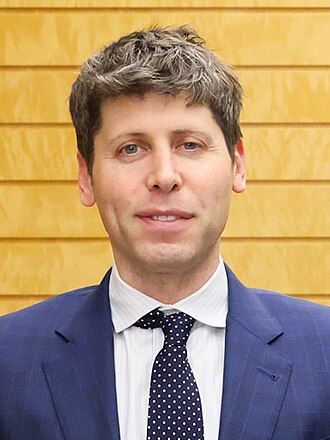
“I think AGI will probably get developed during this president's term, and getting that right seems really important.”
Deadline is the end of Trump's term (20 January 2029); note Altman in the same interview called AGI 'a very sloppy term', so resolution will require a stated AGI definition.
“THE 1,000,000X BOOST: AI will become a million times more powerful during the Trump presidency. AI models are improving at a rate of about 3-4x per year... 100x better models running on 100x better chips running in data centers with 100x more chips is a total increase of 1,000,000x.”
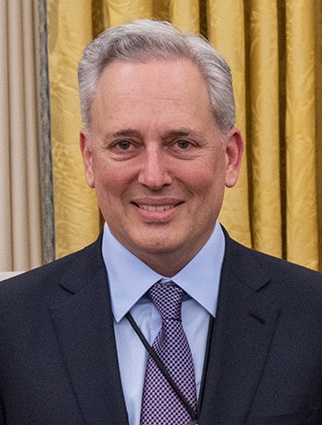
White House AI & Crypto Czar (Special Advisor for AI and Crypto); co-founder of Craft Ventures; All-In Podcast co-host
Said May 2, 2025Deadline Jan 20, 2029David Sacks on X, May 2, 2025 Resolves at the end of Trump's term (Jan 20, 2029); Sacks' arithmetic requires ~100x model gains, ~100x chip gains and ~100x cluster growth over four years.
“Under the last year of Biden, China added 11 times as much power generation capacity as did the United States... Under the Trump administration... we will be adding at least as much electric capacity as China. We think we're going to catch them and maybe even have something a little bit extra.”
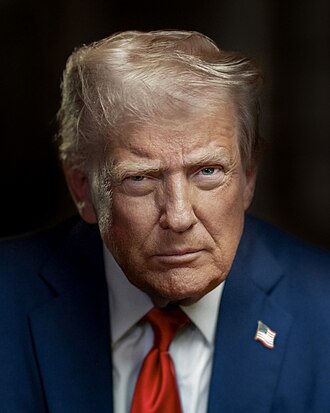
President of the United States
Not yet due (end of term, January 2029), but early data run strongly against it: China added over 500 GW of new generating capacity in 2025 versus roughly 60-65 GW of US utility-scale additions projected by the EIA.
“When I walked into this department, the United States of America had 2 percent of the market. We were producing 2 percent of the chips we need. And my objective when I leave is 40 percent. [Reaching roughly 40% domestic semiconductor production by the end of President Trump's current term, which would take north of $500 billion in local investment.]”
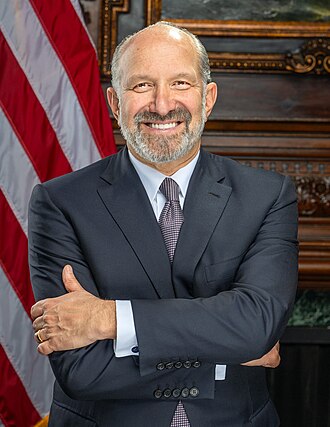
U.S. Secretary of Commerce
Resolves at the end of Trump's term (January 2029) on the share of U.S.-consumed chips produced domestically; analysts including AEI's Derek Scissors immediately called the goal unachievable in that window.
“The objective is to bring 40% of Taiwan's entire chip supply chain and production to the United States within President Trump's current term — under a deal in which Taiwanese chip and tech companies invest at least $250 billion in U.S. capacity, with another $250 billion in government-guaranteed credit: "That's what they get if they don't build in America, the tariff's likely to be 100%."”
U.S. Secretary of Commerce
Taiwan's Vice Premier Cheng Li-chiun publicly called the 40% relocation target "impossible" in February 2026, and analysts broadly agree; resolves by the end of Trump's term.
“The Stargate Project is a new company which intends to invest $500 billion over the next four years building new AI infrastructure for OpenAI in the United States.”

AI research company (announcement made at the White House with Sam Altman, Larry Ellison and Masayoshi Son; equity funders SoftBank, OpenAI, Oracle, MGX)
Four-year clock runs to January 2029. OpenAI said in late 2025 that over $400 billion of the commitment was lined up, but The Information reported in February 2026 that Stargate had fallen short of locking down the full 10GW of capacity through SoftBank and Oracle.
“No AI will be able to get A's on 5 out of 6 of my [labor economics] exams by January of 2029. (By January 30, 2029, an AI selected by Matthew Barnett takes Caplan's six most recent midterms, graded on his students' scale, with an A- counting as an A; $500 at stake.)”
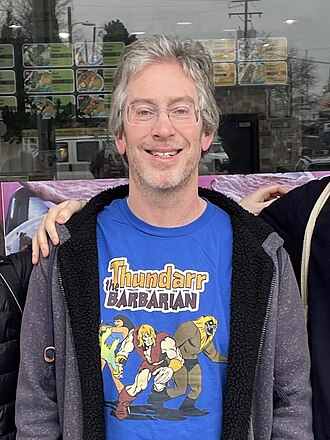
Professor of Economics, George Mason University; author of the 'Bet On It' Substack
Still open until January 30, 2029; Caplan publicly wobbled in March/April 2023 after GPT-4 scored 73/100 (an A) on one of his midterms, writing that he was not conceding but gave himself only a 10–15% chance of winning.
“Within five years, AI will pass every test a human can take.”
AI already matches or beats humans on many standardized exams; comprehensive coverage of 'every test' remains open.
“NextEra is restarting the shuttered 615 MW Duane Arnold nuclear plant in Iowa as a dedicated power source for a data center, funded by Google under a 25-year power purchase agreement, with expectations that the plant will be operational by early 2029.”
JKChairman, President and CEO, NextEra Energy
The 25-year Google PPA was announced October 27, 2025; FERC has approved reconnection and NextEra's own filings put the earliest restart at Q4 2028.
“The memory chip supply shortage will continue until early 2029. Global investors do not fully understand the scale of investment in memory chips or the size of the market — and South Korean memory makers remain at least three years ahead of Chinese competitors such as ChangXin Memory Technologies.”
DIPartner and Senior Managing Director, Tech Analyst, Yorkville Ives
Target date is in early 2029; memory supply remains tight as of late 2026.
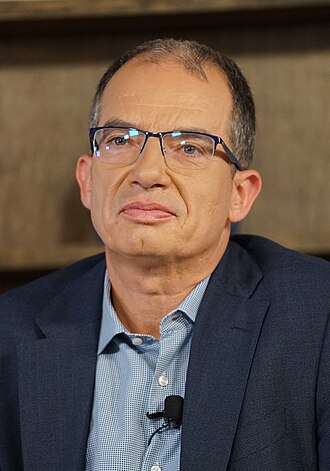
“With the help of AI, scientists will likely 'understand most diseases' in the next three to five years — 'a first for humans on the planet.' If you understand the disease, you will find a way to go fix it.”
Deadline is the outer end of Bancel's three-to-five-year window (April 2029); resolution will turn on whether AI-driven biology delivers fundamental mechanistic understanding of 'most diseases' by then.
“Clearly agents with the capacity I've described will occur in the next few years. There won't be one day when we realize "Oh, my God." It is more about the cumulative evolution of capabilities every month, every six months and so forth. A reasonable expectation is that we will be in this new world within five years, not 10.”
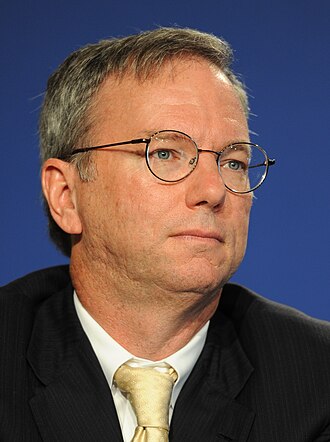
Former CEO and Executive Chairman of Google
The 'new world' Schmidt describes is the convergence of very large context windows, autonomous agents and text-to-action capability.
“Arm's market share in Windows — I think, truly, in the next five years, it could be better than 50%.”
Deadline is mid-2029; as of 2026 Mercury Research estimates Arm-based client CPUs (mostly Apple Macs and Chromebooks) at ~14% of the total client market, with Windows-on-Arm share in the low single digits.
“Power, not GPUs or chips, is the binding constraint on AI infrastructure — and it will remain the bottleneck for at least the next three-plus years, with roughly 40% of planned US data center builds blocked by public resistance.”
Co-founder and CEO of Perplexity AI
Srinivas also flagged memory and CPUs as the next pinch points in the same interview, and said Rubin-generation data centers reach full capacity in 2027.
“AGI — AI that is one to 10 times smarter than humans — will arrive in the next three to five years, earlier than I had anticipated.”
Founder, Chairman and CEO, SoftBank Group
Outer bound of the stated window is mid-2029; Son revised this forecast down to two-to-three years in October 2024.
“Demand for AI infrastructure remains strong, with chips, data centers, energy and workers all limiting supply — the industry could stay supply-constrained for the next two to three years.”
Horizon runs to mid-2029; Haas repeated in September 2026 that demand is 'off the charts' and supply constraints could persist for years.
“Even with only roughly 10, 15% of the electrodes working with Noland, our first patient, we were able to achieve twice the world record [in bits per second]. So I think we'll start vastly exceeding the world record by orders of magnitude in the years to come — start getting to, I don't know, 100 bits per second, a thousand. Maybe five years from now, we might be at a megabit, faster than any human could possibly communicate by typing or speaking.”
Founder of Neuralink; CEO of Tesla, SpaceX and xAI
Hedged ('maybe... might'), but numerically concrete: a ~1,000,000 bits-per-second brain-computer interface by August 2029, versus the single-digit-to-low-tens bps demonstrated at the time of the claim.
“Based on the recent trajectory of capabilities and the continued difficulty of alignment, I now believe there is a meaningful risk that rapid acceleration in AI capabilities leads to catastrophic and irreversible loss of control in the very near term. If I had to quantify my uncertainty I would estimate an all-things-considered risk of 4% over the next year and 15% over the next three years.”
Founder, Alignment Research Center; member of the OpenAI Foundation board and its Safety and Security Committee
Three-year window runs to September 2029; Christiano stressed these are subjective beliefs rather than model outputs.
“China will be "completely self-sufficient" in chips within two to three years. Chinese chipmakers' products might not be as good as Nvidia's, but they are used to competing on lower margins — and US export controls create a powerful incentive for investment in Chinese innovation. "The export controls do not work."”
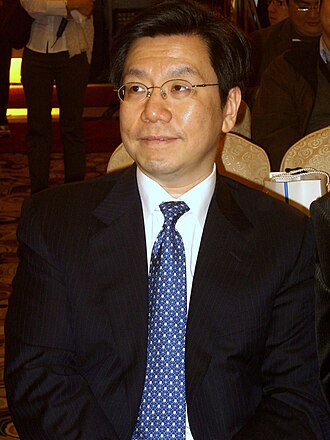
Chairman & CEO of Sinovation Ventures; founder and CEO of 01.AI; former President of Google China
Resolves by September 2029 on whether China's semiconductor supply (including advanced logic and the tools to make it) is effectively domestically sourced; as of the prediction date China still depended heavily on foreign EUV lithography and HBM.
“At some point demand and supply will be inverted again. That's just the nature of markets. It's not going to happen next year. It's not going to happen in the next couple, two, three years. [When it does, markets would slow and enter a 'period of digestion,' potentially lasting six months, nine months or a year.]”
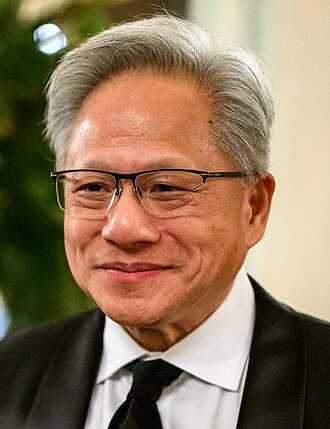
Co-founder and CEO, Nvidia
Huang argues AI compute supply will not exceed demand before roughly 2029; Nvidia's most recent quarter showed data center revenue up 117% year over year, with hyperscaler capex still accelerating.
“Qualcomm expects its push into new markets to generate an additional $22 billion per year by fiscal 2029, of which roughly $4 billion will come from PC chips.”

Semiconductor company; 2024 Investor Day financial targets
Target is Qualcomm's fiscal 2029 (ending September 2029); at its 2026 Investor Day Qualcomm raised the FY29 non-handset target from $22 billion to $40 billion.
“AI will pass a valid Turing test, achieving human-level intelligence, by 2029.”
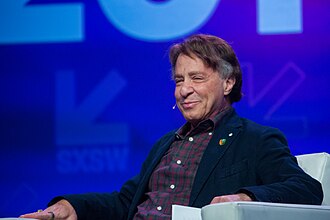
Inventor & futurist, Google
Said Sep 2005Deadline Dec 31, 2029The Singularity Is Near (2005) Conversational tests are increasingly passed, but Kurzweil's own definition requires expert-level performance across the full range of human cognition.
“By 2029, AI is probably smarter than all humans combined.”
CEO of Tesla, SpaceX and xAI; owner of X
Said Mar 13, 2024Deadline Dec 31, 2029Elon Musk post on X, March 13, 2024 Deadline is end of 2029. The companion half of the same post — AI smarter than any single human by 2025 — did not come true.
“$100,000 says AGI will not arrive by 2029: if any single AI system satisfies at least three of my five criteria (e.g., watching a movie and reliably explaining plot and motivations; reading a novel and answering questions about it; working as a competent cook in an arbitrary kitchen; writing bug-free code of more than 10,000 lines from natural-language spec; deriving mathematical proofs from natural language) by then, Musk wins; otherwise I do.”
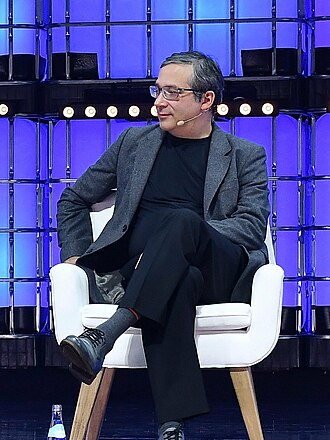
Cognitive scientist, Professor Emeritus of Psychology and Neural Science at NYU, founder of Geometric Intelligence and Robust.AI
Musk never accepted; others (including Vivek Wadhwa, who matched it) raised the wager to $500,000, and Kevin Kelly offered to host it at Long Bets. Metaculus opened markets on several of the five criteria. Resolution due after 2029.
“By the end of the decade, they will be smarter than you or I; we will have superintelligence, in the true sense of the word.”
LAFormer OpenAI Superalignment researcher; author of 'Situational Awareness: The Decade Ahead'
Target is end of 2029.
“By 2029 no computer — or 'machine intelligence' — will have passed the Turing Test.”
Founder of Lotus Development Corporation; co-founder, Electronic Frontier Foundation
The inaugural Long Bets wager, $20,000 against Ray Kurzweil, remains open until the end of 2029 under detailed agreed rules (multi-hour adversarial interviews with human judges and human foils); neither side has conceded, and claimed 'passes' such as Eugene Goostman in 2014 did not meet the bet's terms.
“There's about a trillion dollars' worth of installed base of data centers; over the next four to five years another trillion dollars' worth of data center infrastructure will be built, so we'll have $2 trillion of data centers powering software around the world.”
Co-founder and CEO, NVIDIA
Deadline is the end of 2029 (taking the outer bound of Huang's 'four to five years'). Huang made the remark while arguing that compute efficiency gains meant Sam Altman's reported $7 trillion ask was unnecessary.
“ARK's price target for Tesla is $2,600 per share in 2029, with bear and bull cases valued between ~$2,000 and $3,100 per share; nearly 90% of Tesla's enterprise value and earnings will be attributed to the robotaxi business in 2029, while electric vehicles approximate a quarter of total sales and ~10% of earnings potential.”

Disruptive-innovation asset manager led by Cathie Wood; research team including Tasha Keeney, Sam Korus and Daniel Maguire
Resolves on Tesla's share price in 2029 against the $2,600 expected-value case (bear ~$2,000 / bull ~$3,100); the robotaxi-dominated earnings mix is a secondary check.
“Recursive self improvement is when it's learning on its own. This is not true today. Today, when you set up one of these huge data centers, you have to tell it to learn. But the belief is that this is coming — within four years.”
Former CEO of Google; chair of the Special Competitive Studies Project and CEO of Relativity Space
Deadline is end of 2029. The Crimson reports the timeline as four years; other write-ups of the same talk render it as 'two to four years,' so four years is the generous reading. Schmidt added that AI generating medical conjectures and discovering new facts 'looks like it's very close.'
“That's not to say that artificial intelligence won't have huge economic impacts. But history suggests that they won't come quickly. ChatGPT and whatever follows are probably an economic story for the 2030s, not for the next few years.”
Nobel laureate economist; then New York Times columnist; Distinguished Professor, CUNY Graduate Center
Resolves at the end of the 2020s: the test is whether large measured macroeconomic effects of generative AI arrive before 2030 or only in the 2030s.
“Helion is best positioned to generate electricity from fusion for customers this decade, not the next, and we have the right technology and strategy to build the commercial fusion market over the long term.”
DKCo-founder and CEO, Helion Energy
Helion's Orion plant, contracted to supply Microsoft starting in 2028, is the vehicle for delivering fusion electricity to customers before 2030.
“"IBM is charting the next frontier in quantum computing... Our expertise across mathematics, physics, and engineering is paving the way for a large-scale, fault-tolerant quantum computer — one that will solve real-world challenges and unlock immense possibilities for business." Delivered by 2029, IBM Quantum Starling is expected to be the world's first large-scale, fault-tolerant quantum computer, running 100 million quantum operations on 200 logical qubits — 20,000 times more operations than today's quantum computers.”
IBM says it remains on track: the Loon and Nighthawk processors were unveiled in November 2025, and Krishna reaffirmed the 2029 Starling target on IBM's Q1 2026 earnings call.
“"I think that in 2028 or 2029, you'll see it [quantum computing] have a measurable impact on our top line and bottom line."”
Made the same week IBM and Algorithmiq announced research they billed as a demonstration of quantum advantage; IBM does not yet break out material quantum revenue.
“Within 5 to 6 years, the FDA will approve a primary care app qualified to practice medicine like your primary care physician.”
Founder, Khosla Ventures; co-founder of Sun Microsystems
Resolves if the FDA authorizes a software product cleared to deliver general primary care diagnosis and treatment autonomously; to date FDA authorizations of autonomous AI remain single-condition devices rather than general practice.
“I think Nvidia will be the first $10 trillion company. Whether it comes all at once or whether it comes over the course of the next two to three years, we're patient — we're going to own this, it's one of our largest holdings.”
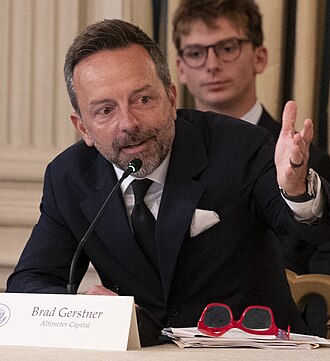
Founder, Chairman and CEO of Altimeter Capital; co-host of the BG2 podcast
Nvidia's market capitalization was roughly $4.8 trillion when the prediction was made; the implied two-to-three-year window runs to about 2029.
“A $1,000 unit of computation has the computing capacity of approximately one thousand human brains.”
Inventor and futurist, author of The Age of Spiritual Machines
Dollar figures are in 1999 dollars; Kurzweil's own benchmark for one human brain is ~2×10^16 calculations per second, so this requires ~2×10^19 cps for $1,000.
“Machines claim to be conscious and these claims are largely accepted. There is growing discussion about the legal rights of computers and what constitutes being human.”
Inventor and futurist, author of The Age of Spiritual Machines
Debate over AI welfare and model self-reports is already underway, but the 'largely accepted' threshold is not yet met.
“Computers have read all available human- and machine-generated literature and multimedia material.”
Inventor and futurist, author of The Age of Spiritual Machines
Frontier model training corpora already cover a large share of digitized text and growing volumes of audio and video, making this one of the closer calls on Kurzweil's 2029 list.
“Human life expectancy has risen to 120 years.”
Inventor and futurist, author of The Age of Spiritual Machines
Current life expectancy is under 80 in the US and about 73 globally, so this would require an unprecedented jump within the remaining window.
“2029 is the real ramp for co-packaged optics — the Street expects 2027, but true mass production only happens between late 2028 and 2029. It is a manufacturing thing: the volumes and yields are not there, so people are going to stay in copper all they can. Rubin is all copper, and Feynman on the GPU is still copper.”
DPFounder and CEO, SemiAnalysis
Resolves on when CPO actually reaches volume production; note that later 2026 reporting suggests Nvidia may pull CPO into the Feynman generation (2028), which would cut against the copper-through-Feynman part of the call.