“AI will pass a valid Turing test, achieving human-level intelligence, by 2029.”
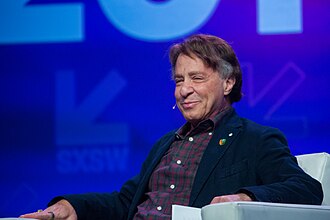
Inventor & futurist, Google
Said Sep 2005Deadline Dec 31, 2029The Singularity Is Near (2005) Conversational tests are increasingly passed, but Kurzweil's own definition requires expert-level performance across the full range of human cognition.
“A $1,000 unit of computation has the computing capacity of approximately one thousand human brains.”
Inventor and futurist, author of The Age of Spiritual Machines
Dollar figures are in 1999 dollars; Kurzweil's own benchmark for one human brain is ~2×10^16 calculations per second, so this requires ~2×10^19 cps for $1,000.
“Machines claim to be conscious and these claims are largely accepted. There is growing discussion about the legal rights of computers and what constitutes being human.”
Inventor and futurist, author of The Age of Spiritual Machines
Debate over AI welfare and model self-reports is already underway, but the 'largely accepted' threshold is not yet met.
“Computers have read all available human- and machine-generated literature and multimedia material.”
Inventor and futurist, author of The Age of Spiritual Machines
Frontier model training corpora already cover a large share of digitized text and growing volumes of audio and video, making this one of the closer calls on Kurzweil's 2029 list.
“Human life expectancy has risen to 120 years.”
Inventor and futurist, author of The Age of Spiritual Machines
Current life expectancy is under 80 in the US and about 73 globally, so this would require an unprecedented jump within the remaining window.
“Within three decades, neural implants will be available that interface directly to our brain cells. The implants would enhance sensory experiences and improve our memory and thinking. [i.e. by ~2029.]”
Inventor, futurist and author of The Age of Spiritual Machines
Deadline is end of 2029. Investigational BCIs (Neuralink, Blackrock, Synchron) now interface with brain tissue in a handful of patients, but enhancement implants for memory or sensory augmentation are not available.
“By 2029 the software for intelligence will have been largely mastered.”
Inventor, futurist and author of The Age of Spiritual Machines
Deadline is end of 2029; Kurzweil has repeatedly reaffirmed the 2029 human-level-AI date, most recently in The Singularity Is Nearer (2024).
“By the end of this decade, as we go into the 2030s, we're going to achieve a new milestone. It's called longevity escape velocity... Right now you go through a year and you use up a year of your longevity. However, scientific progress is also progressing... So right now you're getting back about four months... And as we get to the early 2030s, let's say between 2029 and 2035, depending on how diligent you are, you're going to get back a full year.”
Inventor, futurist and author; Principal Researcher and AI Visionary at Google
Resolves on whether, by 2035, medical/AI-driven progress adds at least a full year of remaining life expectancy per year lived for a diligent individual; Kurzweil elsewhere gives 2029 as his earlier bound for the same milestone.
“The Singularity — a profound merger of human and machine intelligence — will occur around 2045.”
Inventor & futurist, Google
Said Sep 2005Deadline Dec 31, 2045The Singularity Is Near (2005) “People are beginning to have relationships with automated personalities as companions, teachers, caretakers, and lovers. [By 2019.]”
Inventor, futurist and author of The Age of Spiritual Machines
By 2019 companion AI at real scale existed — Replika (2017) and Microsoft's Xiaoice drew millions of users who described them as friends or romantic partners — so people had indeed 'begun' such relationships. But mainstream automated personalities (Siri, Alexa, Cortana) remained transactional and the teacher/caretaker/lover roles only became widespread after the 2022–2023 LLM wave, so the prediction was directionally right but early on breadth.
“A new computer-controlled optical-imaging technology using quantum-based diffraction devices has replaced most lenses with tiny devices that can detect light waves from any angle. These pinhead-sized cameras are everywhere. [By 2019.]”
Inventor, futurist and author of The Age of Spiritual Machines
Quantum-diffraction imaging never replaced lenses — such devices remained confined to research labs in 2019 — and no pinhead-sized cameras became ubiquitous. Cameras did become small, cheap and near-omnipresent in smartphones and doorbells, so the prediction was right in spirit but wrong on both the enabling technology and the stated scale.
“Autonomous nanoengineered machines can control their own mobility and include significant computational engines. These microscopic machines are beginning to be applied to commercial applications, particularly in manufacturing and process control, but are not yet in the mainstream. [By 2019.]”
Inventor, futurist and author of The Age of Spiritual Machines
By 2019 there were no autonomous nanoengineered machines that controlled their own mobility or carried significant onboard computation; commercial nanotechnology remained confined to passive nanomaterials, coatings and lab-stage devices, with none in manufacturing or process-control use.
“The cybernetic chauffeur, installed in one's car, communicates with other cars and sensors on the roads. In this way it successfully drives and navigates from one point to another — by the end of the 1990s, with implementation on major highways feasible during the first decade of the twenty-first century.”
Inventor, futurist and author of The Age of Intelligent Machines
No self-driving 'cybernetic chauffeur' existed by the end of the 1990s, and no automated-highway implementation arrived during 2000-2009 — Google's self-driving project only began in 2009. Kurzweil himself conceded in 2012 that the prediction was wrong, though 'not all wrong.'
“The majority of text is created using continuous speech recognition (CSR) dictation software, but keyboards are still used. CSR is very accurate, far more so than the human transcriptionists who were used up until a few years ago.”
Inventor and futurist, author of The Age of Spiritual Machines
In 2009 the overwhelming majority of text was still typed on physical and touchscreen keyboards; dictation software remained a niche tool, and even Kurzweil's own 2010 defense of his scorecard did not claim this one as a hit.
“Computer displays built into eyeglasses are also used. These specialized glasses allow users to see the normal visual environment, while creating a virtual image that appears to hover in front of the viewer. The virtual images are created by a tiny laser built into the glasses that projects the images directly onto the user's retinas.”
Inventor and futurist, author of The Age of Spiritual Machines
No consumer retinal-projection eyeglasses were in use in 2009; virtual retinal display remained a laboratory and niche military technology, and IEEE Spectrum's 2010 review specifically disputed Kurzweil's attempt to score this prediction as correct.
“Personal computers are available in a wide range of sizes and shapes, and are commonly embedded in clothing and jewelry such as wristwatches, rings, earrings, and other body ornaments. People typically have at least a dozen computers on and around their bodies, which are networked using 'body LANs' (local area networks).”
Inventor and futurist, author of The Age of Spiritual Machines
In 2009 the typical person carried one or two computing devices (a phone, perhaps a laptop); computers embedded in clothing and jewelry networked in 'body LANs' did not exist as a mass phenomenon, though several of the functions Kurzweil listed had migrated into smartphones.
“Intelligent roads are in use, primarily for long-distance travel. Once your car's computer guidance system locks onto the control sensors on one of these highways, you can sit back and relax.”
Inventor and futurist, author of The Age of Spiritual Machines
No instrumented 'intelligent highways' with embedded control sensors were deployed by 2009; automated highway system programs had been wound down in the late 1990s, and the self-driving progress that did follow came from onboard sensing and GPS rather than smart roads.
“Warfare is dominated by unmanned intelligent airborne devices. Many of these flying weapons are the size of small birds, or smaller.”
Inventor and futurist, author of The Age of Spiritual Machines
Armed drones had become central to the air campaigns in Afghanistan and Pakistan by 2009, and Kurzweil argued the prediction held, but warfare overall was still conducted by manned platforms and ground forces, and bird-sized flying weapons were not in general use.
“Translating Telephone technology — speech-to-speech language translation during phone calls — is commonly used for many language pairs.”
Inventor and futurist, author of The Age of Spiritual Machines
Speech translation apps appeared only at the very end of 2009 (Kurzweil himself pointed to a late-2009 iPhone app and Google's voice translation), so the technology existed in early consumer form but was not yet 'commonly used' for many language pairs by the deadline.
“The computational capacity of a $4,000 computing device (in 1999 dollars) is approximately equal to the computational capability of the human brain (20 quadrillion calculations per second).”
Inventor and futurist, author of The Age of Spiritual Machines
In 2019 a ~$4,000 consumer machine delivered on the order of tens of teraflops (10^13), roughly three orders of magnitude short of the 2×10^16 calculations per second Kurzweil specified; 20-petaflop performance was confined to the world's largest supercomputers.
“The summed computational powers of all computers is comparable to the total brainpower of the human race.”
Inventor and futurist, author of The Age of Spiritual Machines
The reviewer's 2020 tally put total world computing capacity at roughly 0.05% of the aggregate computational capacity of all human brains — orders of magnitude below 'comparable' — and concluded the prediction was very wrong.
“Computers are now largely invisible and are embedded everywhere — in walls, tables, chairs, desks, clothing, jewelry, and bodies.”
Inventor and futurist, author of The Age of Spiritual Machines
Embedded and wearable computing did become pervasive by 2019 (smart speakers, sensors, smartwatches, connected appliances), but computing was arguably more visible than ever — dominated by handheld screens and laptops rather than disappearing into furniture, clothing and bodies.
“People experience 3-D virtual reality through glasses and contact lenses that beam images directly to their retinas, and these direct-eye displays are the primary means by which people read documents.”
Inventor and futurist, author of The Age of Spiritual Machines
Retinal-projection glasses and display contact lenses were not commercially available in 2019; VR headsets used conventional panels and were owned by a small minority, while reading was overwhelmingly done on phone, tablet, e-reader and laptop screens.
“Human life expectancy is now over one hundred years.”
Inventor and futurist, author of The Age of Spiritual Machines
Life expectancy in 2019 was roughly 78–79 years in the United States and about 73 years globally — nowhere near 100.
“Paraplegic and some quadriplegic persons routinely walk and climb stairs through a combination of computer-controlled nerve stimulation and exoskeletal robotic devices.”
Inventor and futurist, author of The Age of Spiritual Machines
Powered exoskeletons existed in 2019 but were rare, costly and mostly confined to rehabilitation clinics; paraplegics overwhelmingly still used wheelchairs, and no combined nerve-stimulation/exoskeleton device was in routine daily use.
“There are prevalent reports of computers passing the Turing test, although these tests do not meet the criteria established by knowledgeable observers.”
Inventor and futurist, author of The Age of Spiritual Machines
Widely publicized claims of machines passing the Turing test did appear well before 2019 — most prominently the 'Eugene Goostman' chatbot in 2014 — and in each case AI researchers rejected the test conditions as failing serious criteria, exactly the pattern Kurzweil described.
“Automated driving systems have been found to be highly reliable and have now been installed in nearly all roads. While humans are still allowed to drive on local roads (although not on highways), the automated driving systems are always engaged and are ready to take control when necessary to prevent accidents.”
Inventor and futurist, author of The Age of Spiritual Machines
No roadway automation infrastructure was installed by 2019, humans still drove on highways everywhere, and the only widely mandated intervening system was automatic emergency braking; self-driving progress came from onboard sensors rather than instrumented roads.
“Rotating memories (that is, computer memories that use a rotating platen, such as hard drives, CD-ROMs, and DVDs) are on their way out, although rotating magnetic memories are still used in server computers where large amounts of information are stored. [By 2009.]”
Inventor, futurist and author of The Age of Spiritual Machines
In 2009 hard drives were still the dominant consumer and enterprise storage medium and optical discs (CD/DVD/Blu-ray) were in mass use; flash-based SSDs were a small, expensive niche. Rotating storage was not 'on its way out' by the target date.
“Cables are disappearing. Communication between components, such as pointing devices, microphones, displays, printers, and the occasional keyboard, uses short-distance wireless technology. [By 2009.]”
Inventor, futurist and author of The Age of Spiritual Machines
By 2009 Wi-Fi networking and Bluetooth mice, keyboards and headsets were common, but displays, printers, speakers, charging and most peripheral connections remained wired (USB/HDMI), so cables had not 'disappeared'. Kurzweil scored this correct; critics including IEEE Spectrum disputed that reading.
“Most users have servers in their homes and offices where they keep large stores of digital objects, including their software, databases, documents, music, movies, and virtual-reality environments... There are services to keep one's digital objects in central repositories, but most people prefer to keep their private information under their own physical control. [By 2009.]”
Inventor, futurist and author of The Age of Spiritual Machines
The opposite happened: by 2009 consumers had overwhelmingly moved their media, mail and documents into centralized cloud services (Gmail, YouTube, iTunes, Facebook, Dropbox), and home servers remained a hobbyist niche.
“In terms of circuitry, three-dimensional chips are commonly used. [By 2009.]”
Inventor, futurist and author of The Age of Spiritual Machines
Mainstream logic and memory in 2009 were planar; 3D-stacked devices (3D NAND, HBM, TSV logic stacking) only reached volume production years later. Kurzweil claimed vindication via 'vertical stacking', but IEEE Spectrum judged that it was 'simply wrong to insist that they already are' common.
“Keyboards are rare, although they still exist. Most interaction with computing is through gestures using hands, fingers, and facial expressions and through two-way natural-language spoken communication. [By 2019.]”
Inventor, futurist and author of The Age of Spiritual Machines
Keyboards remained ubiquitous in 2019 — roughly a billion active desktops, laptops and detachable-keyboard devices, plus on-screen keyboards on every smartphone. Touch and voice grew, but gesture and facial-expression interfaces did not displace typing.
“Realistic all-encompassing visual, auditory, and tactile environments enable people to do virtually anything with anybody, regardless of physical proximity. [By 2019.]”
Inventor, futurist and author of The Age of Spiritual Machines
In 2019 VR was a small niche (a few million headsets), haptics were rudimentary, and remote interaction was dominated by flat video calls; no 'all-encompassing' visual-auditory-tactile environments existed.
“Household robots are ubiquitous and reliable. [By 2019.]”
Inventor, futurist and author of The Age of Spiritual Machines
By 2019 the only mass-market household robots were single-task vacuums (Roomba and imitators) and static voice assistants; general-purpose, reliable household robots did not exist.
“Three-dimensional nanotube lattices are now a prevalent form of computing circuitry. [By 2019.]”
Inventor, futurist and author of The Age of Spiritual Machines
Computing in 2019 ran on silicon CMOS; carbon-nanotube circuitry remained a laboratory curiosity (e.g. MIT's 2019 16-bit RV16X-NANO prototype) with no commercial deployment.
“The majority of 'computes' of computers are now devoted to massively parallel neural nets and genetic algorithms. [By 2019.]”
Inventor, futurist and author of The Age of Spiritual Machines
Deep learning was booming by 2019, but neural-network training and inference were still a small minority of global compute cycles, which were dominated by conventional CPU workloads; genetic algorithms remained marginal.
“Rotating memories and other electromechanical computing devices have been fully replaced with electronic devices. [By 2019.]”
Inventor, futurist and author of The Age of Spiritual Machines
Hard disk drives were still shipping by the hundreds of millions in 2019 and carried most data-center bulk storage; the word 'fully' makes the prediction plainly false, and assessors in Armstrong's survey graded it false.
“Thin, lightweight, handheld displays with very high resolutions are the preferred means for viewing documents. [By 2019.]”
Inventor, futurist and author of The Age of Spiritual Machines
Smartphones and tablets in 2019 were thin (sub-quarter-inch), light (ounces) and had pixel densities beyond the eye's resolving power, and had become the everyday medium for reading documents — though the companion claim that AR direct-eye displays would be even more common was wrong.
“By 2010 computers will disappear. They'll be so small, they'll be embedded in our clothing, in our environment. Images will be written directly to our retina, providing full-immersion virtual reality, augmented real reality. We'll be interacting with virtual personalities.”
Inventor, futurist and author of The Singularity Is Near
In 2010 laptops, desktops and smartphones were plainly visible devices; retinal projection displays and full-immersion VR were not commercial products, and IEEE Spectrum judged the prediction only defensible by redefining 'computer' so loosely as to make it trivial.