“we will cross well over 1 million GPUs brought online by the end of this year! very proud of the team but now they better get to work figuring out how to 100x that lol”
OpenAI does not disclose an audited GPU count, so the milestone cannot yet be independently judged; contemporaneous reporting noted the figure refers to aggregate capacity across partners and sites rather than a single cluster.
“2026 will likely see the arrival of systems that can figure out novel insights.”
Deadline is end of 2026 and still open; OpenAI announced in September 2026 that it had reached its internal 'automated research intern' milestone, but independent evidence of AI systems producing genuinely novel insights remains contested.
“OpenAI will not go public in 2026: "We're not rushing into an IPO. I actually think that, given everything happening with safety, right now would be an ill-advised moment to go public, and we don't feel pressure on that... I would say not 2026."”
OpenAI filed confidentially for an IPO in June 2026; Altman pointed to safety and alignment work as the reason for delay and declined to commit to 2027. Resolves at year-end 2026.
“OpenAI is "not quite yet" at AGI, but by the end of the year [2026] the company will have an internal system I would call AGI. [OpenAI's charter defines AGI as "highly autonomous systems that outperform humans at most economically valuable work."]”
Deadline is end of 2026. OpenAI's forthcoming Astra model family is the basis for the confidence; chief research officer Mark Chen separately estimated the company is "80% of the way" to AGI, and Greg Brockman suggested this period may later be remembered as when AGI was created. Resolution will hinge on OpenAI's own internal, unverified definition rather than any external benchmark.
“2027 may see the arrival of robots that can do tasks in the real world.”
Hedged with 'may'; resolution will turn on how demanding a reading of 'tasks in the real world' is applied.
“First of all, we're doing well more revenue than that [$13 billion]... [Asked whether OpenAI could reach $100 billion in revenue in 2028 or 2029:] How about '27?”
OpenAI's annualized run rate reached about $40 billion by August 2026; whether calendar-2027 revenue reaches $100 billion remains open.
“By March 2028 we have a legitimate AI researcher — a system capable of autonomously delivering on large research projects.”
Still open; OpenAI said in September 2026 it was making 'strong progress' toward the March 2028 target while conceding it does not yet know how to safely reach full recursive self-improvement.
“If you are a sophomore now, you will graduate into a world with AGI in it.”
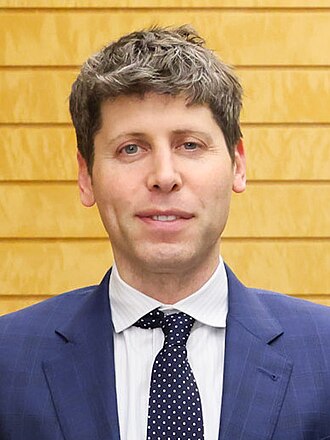
Co-founder and CEO of OpenAI
Resolves when the class of 2028 graduates in June 2028; the Daily reports Altman framed AGI as likely to arrive 'within the next few years.' Note the ceremony date is reported inconsistently by the Daily itself (Friday Feb. 13 vs. 'Saturday evening').
“I think AGI will probably get developed during this president's term, and getting that right seems really important.”
Deadline is the end of Trump's term (20 January 2029); note Altman in the same interview called AGI 'a very sloppy term', so resolution will require a stated AGI definition.
“We expect to... grow to hundreds of billions [in annualized revenue] by 2030. We are looking at commitments of about $1.4 trillion over the next 8 years.”
Said Nov 6, 2025Deadline Dec 31, 2030Sam Altman post on X, 6 November 2025 Open until end of 2030; OpenAI's run rate was reported above $40 billion in August 2026, so the trajectory is early but the target requires roughly another order of magnitude.
“I would certainly say by the end of this decade, so, by 2030, if we don't have models that are extraordinarily capable and do things that we ourselves cannot do, I'd be very surprised.”
Altman gave the remark while in Berlin for the 2025 Axel Springer Award; he also said AI would take over 30–40% of today's economic tasks. Resolves at the end of 2030.
“In the next decade, [computer programs that can think] will do assembly-line work and maybe even become companions.”
Deadline is March 2031; resolution will turn on whether AI-driven robots (e.g. humanoid systems being piloted by Tesla, Figure and BMW/Mercedes suppliers) perform general assembly-line work rather than only pre-programmed industrial automation.
“There is also about $30 trillion worth of privately-held land in the US (not counting improvements on top of the land). Assume that this value will roughly double, too, over the next decade — this is somewhat faster than the historical rate, but as the world really starts to understand the shifts AI will cause, the value of land, as one of the few truly finite assets, should increase at a faster rate.”
Resolves against the value of privately-held US land in 2031 versus the ~$30 trillion baseline Altman cited in 2021.
“It is possible that we will have superintelligence in a few thousand days (!); it may take longer, but I'm confident we'll get there.”
Target date set by interpreting 'a few thousand days' as roughly 2,000–3,000 days from September 2024 (i.e. ~2030–2032); the claim is hedged ('it is possible', 'may take longer').
“OpenAI's audacious long-term goal is to build 250 gigawatts of capacity by 2033.”
For scale: 250GW is roughly a third of US peak power demand and more than India's total capacity; OpenAI was operating on the order of a gigawatt-scale footprint when the memo was written.
“Superhuman machine intelligence (SMI) is probably still decades away.”
Operationalized as superhuman machine intelligence not arriving before ~2035 (at least two decades from February 2015); written months before Altman co-founded OpenAI and notably more conservative than his later 'few thousand days' superintelligence timeline.
“Anyone in 2035 should be able to marshall the intellectual capacity equivalent to everyone in 2025; everyone should have access to unlimited genius to direct however they can imagine.”
Closing prediction of Altman's 'Three Observations' essay on AGI-driven abundance; resolves at the end of 2035.
“The world will not change all at once; it never does. Life will go on mostly the same in the short run, and people in 2025 will mostly spend their time in the same way they did in 2024. We will still fall in love, create families, get in fights online, hike in nature, etc.”
Despite rapid model progress and surging chatbot adoption in 2025, daily life, time use and employment patterns did not visibly shift at the population level during the year, matching Altman's deliberately modest short-run claim.
“In 2025, we will release AI-powered tools that can handle sophisticated software engineering and AI agents that can handle real-world tasks like making doctor's appointments and helping to run a business. These agents will be super assistants who can collaborate with workers in every industry.”
Co-founder and CEO, OpenAI
OpenAI shipped both categories in 2025: Codex, a cloud-based software engineering agent, launched in May 2025 (broadened to Plus users in June), and Operator (January 2025) followed by ChatGPT agent (July 2025) performed real-world browsing/booking tasks. Reliability fell short of 'super assistant' framing, but the stated releases happened within the year.
“In the next five years, computer programs that can think will read legal documents and give medical advice.”
By 2026 LLM-based tools (Harvey, Thomson Reuters CoCounsel and similar) are in mainstream use for contract analysis and document review at large law firms, and hundreds of millions of people consult ChatGPT weekly for health questions while clinicians widely use tools like OpenEvidence. Both halves of the claim were met within five years, though such advice remains error-prone and non-authoritative.
“Self-driving cars are going to get here much faster than people think — we'll see them in three to four years.”
By October 2019 no driverless car was generally available: Waymo One launched in December 2018 with safety drivers behind the wheel, and Waymo only opened fully driverless rides to the public in a ~50-square-mile Phoenix-area geofence in October 2020, a year after Altman's deadline.
“The world's first commercial fusion energy generator marches towards 2024 operation!”
CEO of OpenAI; then board chairman and lead investor in Helion Energy
Helion finished assembling Polaris in late 2024 and began initial operations, but it was a prototype, not a commercial generator, and produced no electricity in 2024. Helion's first commercial plant, Orion, only broke ground in July 2025 and targets 2028.
“We will next ship GPT-4.5, the model we called Orion internally, as our last non-chain-of-thought model... In both ChatGPT and our API, we will release GPT-5 as a system that integrates a lot of our technology, including o3. We will no longer ship o3 as a standalone model. [Timing: GPT-4.5 in 'weeks', GPT-5 in 'months'.]”
GPT-4.5 shipped 27 February 2025 (about two weeks later) and GPT-5 shipped 7 August 2025 (within 'months'), so the timing held; however OpenAI did ship o3 as a standalone model on 16 April 2025, contradicting the 'no longer ship o3 as a standalone model' part.
“We expect to end this year above $20 billion in annualized revenue run rate.”
Said Nov 6, 2025Deadline Dec 31, 2025Sam Altman post on X, 6 November 2025 OpenAI CFO Sarah Friar subsequently said the company ended 2025 with more than $20 billion in annualized revenue, and August 2026 Bloomberg reporting on a $40B+ run rate described it as roughly double the end-2025 figure. Numbers are company-reported rather than audited.
“We think it is plausible that by September of next year [2026] we have an intern-level AI research assistant.”
On 6 September 2026 OpenAI said it had hit the 'automated research intern' goal — a system that carries out well-defined research tasks under human direction, including ones taking a skilled researcher days — and reported roughly 3.1 agent-workdays per human workday internally. The milestone is OpenAI's own self-assessment and has not been independently audited.
“Our very first reasoning model was like a top one-millionth competitive programmer in the world... o3, which we talked about publicly in December, is the 175th best competitive programmer in the world. I think our internal benchmark is now around 50, and maybe we'll hit number one by the end of this year.”
OpenAI's reasoning models did reach the very top tier during 2025 — a perfect 12/12 at the September 2025 ICPC World Finals, enough for a first-place human team ranking — but no OpenAI model was verifiably the world's number-one individual competitive programmer by December 31, 2025: human champion Przemysław 'Psyho' Dębiak beat OpenAI's model at the AtCoder World Tour Finals heuristic contest in July 2025, and OpenAI only swept the top humans at AtCoder in mid-2026.
“In 2025, we may see the first AI agents join the workforce and materially change the output of companies.”
AI coding, research, and support agents were deployed in production across many companies during 2025, with measurable output changes in software engineering and customer service.