“Probably our AI revenue — not probably, definitely — our AI revenue will exceed all other SpaceX revenue probably in September, like next month.”
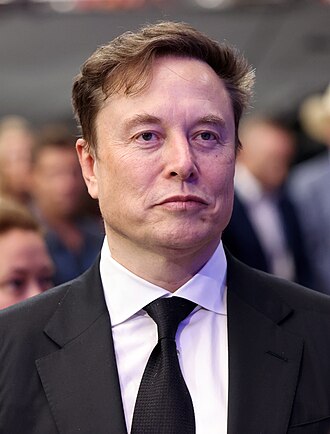
CEO of SpaceX (SpaceXAI) and Tesla
In Q2 2026 SpaceX reported $7.81 billion of revenue with roughly $2.56 billion from AI, so the crossover requires a large jump; September segment revenue will not be verifiable until SpaceX reports third-quarter results.
“Colossus 2 is 110k GB200 and 440k GB300. Another 220k GB300 will be fully operational next week.”
CEO of SpaceX and xAI (SpaceXAI)
The stated week runs through roughly October 4, 2026; no independent confirmation of the additional 220k GB300s being fully operational has been published yet.
“Another 220k GB300 [will be operational at Colossus 2] in November.”
CEO of SpaceX and xAI (SpaceXAI)
Deadline is end of November 2026; Musk's schedule implies Colossus 2 would reach roughly 990k GB200/GB300 chips by then.
“Grok 5 will be AGI or something indistinguishable from AGI.”
Founder and CEO of xAI; CEO of Tesla and SpaceX
Said Oct 18, 2025Deadline Dec 31, 2026Elon Musk post on X, October 18, 2025 Target date is an editorial inference from xAI's own Grok 5 schedule (training start September 2025, release originally signalled for end-2025/early-2026). As of September 2026 Grok 5 has still not been released — it slipped from Q1 to Q2 2026 and remains in training — so the claim cannot yet be judged.
“We expect to be in production with the Cybercab, which is really highly optimized for autonomous transport, in probably — well, I tend to be a little optimistic with time frames — but in 2026. So yeah, before 2027, let me put it that way.”
Deadline is end of 2026. Tesla announced in February 2026 that the first Cybercab had rolled off the production line at Giga Texas, so the claim appears on track pending volume production.
“Hopefully, high production [of Tesla's humanoid robots] for other companies in 2026.”
Deadline is end of 2026; Tesla's Optimus production timeline has already slipped once, with the production-intent V3 design moved into 2026.
“I think we will literally build a legion, at least one legion of robots this year, and then probably 10 legions next year — i.e. roughly 50,000 Optimus humanoid robots in 2026.”
Deadline is end of 2026. Tesla built no 'legion' in 2025, and as of September 2026 series production at Fremont had not started (Tesla's Q2 2026 update said production was 'anticipated later this year'), making 50,000 units in 2026 effectively unreachable.
“We're going to be building a million-unit Optimus production line, hopefully with the production start towards the end of next year [2026].”
Deadline is end of 2026. Tesla decommissioned the Fremont Model S/X lines in May 2026 and began converting them for a line designed for 1 million robots/year, but start of production had slipped from 'late July or August' to 'later this year' as of the Q2 2026 update.
“We expect to have fully autonomous vehicles in probably somewhere between a quarter and half of the United States by the end of the year, pending regulatory approval... even if it is city-by-city, we expect to be in dozens of major cities by the end of the year.”
As of mid-2026 Tesla had expanded robotaxi service to a handful of additional metros (Dallas, Houston, Phoenix, Miami, Orlando, Tampa, Las Vegas) with fleets still reported in the dozens per city, well short of the year-end target.
“The xAI game studio will release a great AI-generated game before the end of next year [2026].”
CEO of Tesla, SpaceX and xAI; owner of X
Deadline is December 31, 2026; xAI's game studio, announced in late 2024 and staffing up through 2025, had not shipped a title as of late 2026.
“Grok will make a movie that is at least watchable before the end of next year [2026] and really good movies in 2027.”
CEO of Tesla, SpaceX and xAI; owner of X
First deadline is December 31, 2026 for an 'at least watchable' Grok-made movie, with a follow-on 2027 target for 'really good movies'; as of late 2026 xAI had released Grok Imagine video generation but no Grok-produced film.
“I think we're quite close to digital superintelligence. It may happen this year, and if it doesn't happen this year, next year for sure. Digital superintelligence, defined as smarter than any human at anything.”
CEO of Tesla, SpaceX and xAI
Deadline is end of 2026; 2025 passed with no system smarter than any human at anything, so resolution rests on the remainder of 2026.
“Asked when unsupervised FSD would reach customer cars: "I'm just guessing here, but probably in the fourth quarter" [of 2026] — unsupervised FSD will not arrive in consumer Teslas until Q4 2026 at the earliest.”
As of late September 2026, unsupervised FSD has still not been released to consumer vehicles; Musk cited complex intersections, poor road markings and weather as remaining obstacles, while repeating in May 2026 that it would be 'widespread' in the U.S. by year-end.
“We expect to end this year with over two gigawatts of compute. And probably our cumulative compute online by the end of next year will be several times higher — so it may be closer to 10GW of compute than 5GW of compute.”
Executive Chairman and CEO, SpaceX
SpaceX ended Q2 2026 with 1.4 GW of nameplate compute, up from 1.0 GW in Q1 and 0.4 GW a year earlier.
“If we get lucky, yet another 220k GB300 by late December [at Colossus 2].”
CEO of SpaceX and xAI (SpaceXAI)
Explicitly hedged ('if we get lucky'); taken together the three tranches would put Colossus 2 above 1.2 million GB200/GB300 chips by year-end 2026.
“Within 10 years it will be 'unusual' for cars to be manufactured that are not fully autonomous; the disruption of car-based transportation will take place over the next 20 years.”
Deadline is early 2027; as of 2026 the overwhelming majority of new vehicles manufactured worldwide are not fully autonomous, with only limited driverless fleets (Waymo, Zoox, Tesla's supervised robotaxi pilots) on the road.
“I'm cautiously optimistic that SpaceX will have a Fable/GPT-6 level model in 2 to 3 months... If our second derivative remains strong, SpaceX will reach pole position in about 6 months.”
Executive Chairman and CEO, SpaceX
Made after Grok 4.7's launch, with Musk conceding SpaceXAI was third in agentic coding behind Anthropic and OpenAI; the 'pole position' claim is conditioned on continued acceleration.
“Tesla expects to have self-driving working on the Tesla Semi probably around the end of this year or early next year.”
Made in response to an analyst question about Semi autonomy; Musk framed driverless trucks as a response to a shortage of truck drivers.
“Tesla will be able to produce Optimus humanoid robots in the millions and sell them for under $20,000 — less than a third of the price of a Model Y — and expects to be ready to take orders for the robot in three to five years.”
Deadline runs to September 2027. As of September 2026 Tesla has not opened orders for Optimus, has not disclosed a consumer price, and volume production at Fremont had not yet begun.
“Tesla's Optimus robots will probably be available for sale to the public by the end of next year [2027]; "probably later this year, by the end of this year [2026], I think they'll be doing more complex tasks and still deployed in an industrial environment."”
Deadline is end of 2027; as of September 2026 Optimus remains in limited internal use, and Musk acknowledged in January 2026 that no Optimus robots were yet doing useful work in Tesla's factories.
“Our tentative target is to actually have 20 gigawatts at the power and cooling level online by the end of next year. Now I don't think we're going to achieve 20 gigawatts... Some of them won't pan out exactly on time, but I would expect that we still probably have at the power plant level, something close to 15 gigawatts.”
Executive Chairman and CEO, SpaceX
“There's an R&D fab that we're building in Austin — that's a collaboration between Tesla and SpaceX. We have all the equipment on order. I think we'll probably be able to make something useful by the end of next year. It really is crawl, walk, run... It's either build Terafab or fail to scale. Those are the two options.”
CEO of SpaceX and CEO of Tesla
Tesla broke ground on the Giga Texas North Campus research fab in April 2026; the far larger Terafab plant in Grimes County, Texas, with an estimated $16.8 billion first phase, is a separate, later-stage project.
“AI will be able to do anything digital (that doesn't require shaping atoms) at a superhuman level by the end of next year.”
CEO of Tesla and SpaceX, owner of X
Said Aug 31, 2026Deadline Dec 31, 2027Elon Musk post on X, August 31, 2026 Posted in reply to Vercel CEO Guillermo Rauch's remark that AI is 'almost running out of but it can't do this one other thing' in 2026; the deadline is the end of 2027.
“Even with only roughly 10, 15% of the electrodes working with Noland, our first patient, we were able to achieve twice the world record [in bits per second]. So I think we'll start vastly exceeding the world record by orders of magnitude in the years to come — start getting to, I don't know, 100 bits per second, a thousand. Maybe five years from now, we might be at a megabit, faster than any human could possibly communicate by typing or speaking.”
Founder of Neuralink; CEO of Tesla, SpaceX and xAI
Hedged ('maybe... might'), but numerically concrete: a ~1,000,000 bits-per-second brain-computer interface by August 2029, versus the single-digit-to-low-tens bps demonstrated at the time of the claim.
“By 2029, AI is probably smarter than all humans combined.”
CEO of Tesla, SpaceX and xAI; owner of X
Said Mar 13, 2024Deadline Dec 31, 2029Elon Musk post on X, March 13, 2024 Deadline is end of 2029. The companion half of the same post — AI smarter than any single human by 2025 — did not come true.
“The @xAI goal is 50 million in units of H100 equivalent-AI compute (but much better power-efficiency) online within 5 years.”
Founder and CEO of xAI; CEO of Tesla and SpaceX; owner of X
For scale, 50 million H100-equivalents at H100 power draw would imply roughly 35 GW; xAI's largest site, Colossus 2, was estimated by Epoch AI at about 946 MW of IT power and roughly 1.1 million H100-equivalents as of September 2026.
“xAI will have more AI compute than everyone else combined in <5 years.”
Founder and CEO of xAI; CEO of Tesla and SpaceX; owner of X
Posted in response to SemiAnalysis compute rankings; days later Musk announced a third Memphis building taking the Colossus site toward 2 GW, while Epoch AI's tracked 86 AI data centers totalled about 13 GW of IT power as of September 2026.
“Twenty years is a short period of time to have something like 12-15 percent of the workforce be unemployed [due to autonomous transport and automation] — governments will have to introduce a universal basic income.”
Deadline is 2037. US unemployment has remained in the 3.5-4.5% range through 2026, far below the 12-15% Musk anticipated, and no universal basic income has been adopted.
“I don't know what long term is, maybe it's 10, 20 years or something like that. My prediction is that work will be optional. It'll be like playing sports or a video game or something like that.”
CEO of Tesla, SpaceX and xAI
Musk framed AI and humanoid robots (including Tesla's Optimus) as eventually eliminating poverty and making currency irrelevant; the outer bound of his stated 10–20 year window falls at the end of 2045.
“The Tesla Semi will go into production in 2019, with Enhanced Autopilot — automatic emergency braking, automatic lane keeping and lane departure warning — standard on the truck, which is also platooning-enabled.”
Production did not begin in 2019: the timeline slipped to 2020, then 2021, then 2022, with only a handful of trucks delivered to PepsiCo at the end of 2022 and the first high-volume-line Semi rolling out of Giga Nevada in April 2026. Convoy mode and the self-driving claims were quietly dropped from Tesla's messaging.
“It takes about a year to ramp up production. So we're tentatively aiming for 50,000 units in 2024 for Tesla Semi in North America. And obviously, we'll expand beyond North America.”
Tesla missed the target by orders of magnitude: Semi output stayed at pilot-line scale through 2024 (Musk had already said in mid-2023 that volume production would not start until late 2024), and the 50,000-unit-per-year Nevada factory only opened in September 2026.
“I am confident that in less than a year you will be able to go from highway on ramp to highway exits without touching any controls.”
Nothing shipped by mid-2015; Autopilot's Autosteer only arrived in October 2015 and required hands on the wheel, with no ability to handle interchanges or take exits. On-ramp-to-off-ramp driving ('Navigate on Autopilot') did not appear until late 2018, and still under driver supervision.
“A Tesla car next year will probably be 90-percent capable of autopilot. Like, so 90 percent of your miles can be on auto. For sure highway travel.”
Autopilot v7.0 shipped in October 2015 with highway Autosteer, auto lane change and self-parking, partially matching the 'for sure highway travel' part. But it was a supervised Level 2 system requiring hands on the wheel, and nowhere near 90% of owners' miles were driven autonomously.
“I think from a technology standpoint — and it is important to distinguish these things, because they are very different — technologically I think Tesla will have a car that can do full autonomy in about three years. Maybe a bit sooner.”
By the end of 2018 Tesla had no vehicle capable of full autonomy; Autopilot/FSD remained an SAE Level 2 driver-assistance system requiring constant supervision — and still does as of 2026.
“We're going to end up with complete autonomy, and I think we will have complete autonomy in approximately two years.”
No Tesla achieved complete autonomy by the end of 2017; the promised fully autonomous cross-country demonstration drive never happened and FSD remained a supervised Level 2 system.
“In ~2 years, summon should work anywhere connected by land & not blocked by borders, eg you're in LA and the car is in NY.”
Cross-country Summon never shipped. The only meaningful expansion was Smart Summon in September 2019, which moves a car short distances within a parking lot under line-of-sight supervision.
“I consider autonomous driving to be a basically solved problem. We're less than two years away from complete autonomy. Regulators however will take at least another year; they'll want to see billions of miles of data.”
Complete autonomy did not arrive by mid-2018 — nor by 2026. Tesla's FSD remained a supervised Level 2 system, and autonomous driving was clearly not a 'solved problem.'
“I remain confident that we will have the basic functionality for level five autonomy complete this year. I think there are no fundamental challenges remaining for level five autonomy.”
Tesla released a limited FSD Beta in October 2020, but it was an SAE Level 2 system requiring constant driver supervision, not completed Level 5 functionality. Tesla's FSD is still classified as Level 2 in 2026.
“Neuralink is working super hard to ensure implant safety & is in close communication with the FDA. If things go well, we might be able to do initial human trials later this year.”
No human trials began in 2021. The FDA rejected Neuralink's initial application in 2022, approved human trials only in May 2023, and the first human implant took place in January 2024.
“Production of the Cybercab will begin at Gigafactory Texas in April 2026: "We should be able to achieve a net result of less than a ten-second cycle time, basically a unit every ten seconds."”
The first production Cybercab rolled off the Giga Texas line on February 17, 2026 and formal/volume production began in April 2026, matching the stated timeline; the ten-second cycle time, however, has not been demonstrated — only tens of units were visible at the site weeks after the April start.
“We're certainly getting there. I think it will be available for unsupervised personal use by the end of this year in certain geographies... I'm confident that by the end of this year, within a number of cities in the U.S., it will be available to end users.”
No unsupervised FSD was released to Tesla owners in any U.S. city by the end of 2025 — the Austin robotaxi service launched with in-car safety monitors, and on the Q1 2026 earnings call (April 22, 2026) Musk pushed unsupervised FSD for consumer vehicles to Q4 2026 'at the earliest.'
“Dojo V1.0 isn't done yet. About a year away. Not just about the chips. Power & cooling problem is hard.”
A year later, at Tesla's AI Day on August 19, 2021, Dojo existed only as the D1 chip and training tiles, and Musk said the system would be 'operational next year.' The first Dojo cabinet/ExaPod only entered production in July 2023, and Tesla disbanded the Dojo team in 2025.
“We should have Dojo operational next year. [The 10-cabinet Dojo ExaPod, not yet assembled, will break the ExaFlop barrier and become the fastest AI training computer in the world.]”
Dojo was not operational in 2022: at AI Day in September 2022 Tesla had progressed only to a system tray and a single cabinet and was targeting a full ExaPod in Q1 2023. Dojo only went into production in July 2023, and Tesla wound down the program in 2025.
“So, we think we'll probably have a prototype [of the Tesla Bot humanoid robot] sometime next year.”
Tesla showed semi-functional Optimus prototypes at AI Day on September 30, 2022 — one walked unassisted on stage — meeting the 'prototype sometime next year' timeline, albeit far short of the concept presented in 2021.
“Neuralink wants to have its first human patient equipped with the technology before the end of 2020 — the company is looking to start trials on humans next year, pending FDA approval.”
No human was implanted in 2020. Neuralink did not even seek FDA approval until 2022 (initially rejected), received approval in May 2023, opened recruitment in September 2023, and announced its first human implant on January 29, 2024.
“We're not testing people yet, but I think it won't be too long. We may be able to implant a neural link in less than a year in a person, I think.”
Neuralink implanted no human by May 2021; the device was only demonstrated in a pig (August 2020) and a monkey (2021). The first human implant came on January 29, 2024, nearly four years later.
“We hope to have this in our first humans — which will be people that have severe spinal cord injuries like tetraplegics, quadriplegics — next year, pending FDA approval.”
Neuralink implanted no human in 2022; its FDA application was rejected that year over safety concerns. Approval came in May 2023 and the first human implant in January 2024.
“We're headed toward a situation where AI is vastly smarter than humans, and I think that time frame is less than five years from now. But that doesn't mean that everything goes to hell in five years. It just means that things get unstable or weird.”
By July 2025 no AI system was 'vastly smarter than humans': frontier models remained below human experts on many reasoning, agentic and real-world tasks, and Musk himself had by then pushed his superintelligence date out to 2025–2026 and beyond.
“Well, hopefully end of this year [2024]... Grok 3, if we're lucky. [And] Grok 3 will be, I don't know, an order of magnitude better than Grok 2 — hoping for it to be state-of-the-art. I mean, this is the goal. We may fail at this goal. That's the aspiration.”
CEO of Tesla, SpaceX, xAI and owner of X
Grok 3 did not ship in 2024; it launched on February 17, 2025, roughly two months past the stated 'end of this year' target. At release it did post leading benchmark and Chatbot Arena scores, but only briefly before rivals leapfrogged it.
“The Colossus 2 supercomputer for @Grok is now operational. First Gigawatt training cluster in the world. Upgrades to 1.5GW in April.”
Founder and CEO of xAI; CEO of Tesla and SpaceX; owner of X
Colossus 2 is indeed the largest tracked AI data center, but the gigawatt claim was premature and the April upgrade slipped: Epoch AI's satellite analysis in January 2026 found only ~350 MW of cooling capacity and expected 1 GW no earlier than May, and as of September 2026 Epoch still estimated Colossus 2 at about 946 MW of IT power, projecting ~1,531 MW only in Q1 2027.
“The pace of progress in artificial intelligence is incredibly fast... The risk of something seriously dangerous happening is in the five year timeframe. 10 years at most.”
Both the five-year (2019) and the ten-year outer bound (November 2024) passed with no catastrophic AI event of the kind Musk described; the phrasing was hedged ('the risk of something seriously dangerous'), but no reasonable reading of that threshold was met by the deadline.
“AI will probably be smarter than any single human next year.”
CEO of Tesla, SpaceX and xAI; owner of X
No AI system was smarter than the smartest single human by the end of 2025; frontier models remained below top human experts across many domains. Musk himself walked the timeline back in January 2025, shifting to vaguer language about what AI 'will do'.
“Version 12 (end-to-end neural nets) will far exceed human safety even when unsupervised.”
FSD v12 shipped in 2024 but remained a supervised Level 2 system that never operated unsupervised and did not demonstrate far-better-than-human safety. Musk went on to make the same claim about v14 and v15.
“We do expect actually to start fully autonomous, unsupervised FSD in Texas and California next year. And obviously that's with the Model 3 and Model Y.”
Tesla's Austin robotaxi service launched in June 2025 with in-car safety monitors, not unsupervised operation, and California rides ran with a safety driver under state permitting rules. No customer Model 3 or Model Y received unsupervised FSD in 2025; in April 2026 Musk pushed consumer unsupervised FSD to Q4 2026 at the earliest.
“Tesla will launch robotaxi service in Austin in June, and robotaxis will be in many other cities in the U.S. by the end of this year.”
Robotaxi did launch in Austin in June 2025, but by the end of the year the service ran only in Austin and the San Francisco Bay Area — the latter with a chaperone in the car — instead of the many cities Musk promised. Tesla reached roughly seven U.S. metro areas only in mid-2026.
“Tentatively, June 22. We are being super paranoid about safety, so the date could shift. First Tesla that drives itself from factory end of line all the way to a customer house is June 28.”
Tesla began invite-only robotaxi rides in Austin on June 22, 2025 — though with safety monitors riding in the passenger seat — and completed a factory-to-customer autonomous delivery in the final days of June, meeting both dates in the post.
“Tesla will have genuinely useful humanoid robots in low production for Tesla internal use next year.”
Tesla did build and deploy a small number of Optimus units internally for demos and narrow tasks during 2025, but never reached genuine 'low production' of useful robots; design changes pushed the production-intent V3 version and its production line into 2026.
“We expect to have several thousand Optimus robots produced at Tesla and doing useful things by the end of this year.”
Tesla did not produce several thousand working Optimus robots in 2025; output stalled on hardware redesigns and the robots that existed were used for demonstrations and limited pilot tasks, with volume production of the V3 design deferred to 2026.
“Grok 4.20 is coming out in 3 or 4 weeks.”
CEO of Tesla, SpaceX and xAI; owner of X
Grok 4.20 missed the 3–4 week window by a wide margin: it did not reach users until a limited beta on 17 February 2026, with the full rollout and general availability following in March 2026 — roughly two to three months later than promised. (The claim that it beat GPT-5.1 and Gemini 3 Pro came from third-party Alpha Arena trading-sim reports, not from Musk.)
“I think we have a shot at being in production for version 1 of Optimus hopefully next year [2023]... It will be able to do basically anything humans don't want to do.”
Optimus was nowhere near production in 2023 — Tesla only demoed prototypes (Gen 1/Gen 2). Tesla was still installing its first Optimus production lines at Fremont in 2026, roughly three years after the promised production start.
“We'll actually have a production-intent [Optimus V3] prototype ready to show off in Q1, probably February or March... It won't even seem like a robot. It will seem like a person in a robot suit.”
No V3/Gen 3 prototype was shown in Q1 2026. Musk confirmed the delay on March 31, 2026, then on the April 22, 2026 Q1 call pushed the unveil to 'probably middle of this year' (later, closer to production start), citing polish and copycat concerns; it remained unrevealed as of September 2026.
“Start of production [for Optimus at Fremont] is, we're assuming, somewhere around the late July, August time frame — though initial output will be 'quite slow' and the production rate this year is 'literally impossible to predict.'”
The late-July/August window was missed: Tesla's Q2 2026 update (July 22) said Fremont construction had begun with production only 'anticipated later this year,' Musk said on the call that Tesla 'will soon start production' with Optimus, and August 2026 reporting described the start as pushed to 'later this year.'
“I think we'll probably have autonomous ride-hailing in probably half the population of the US by the end of the year. That's at least our goal, subject to regulatory approvals.”
At the end of 2025 Tesla's robotaxi service ran only in Austin and the Bay Area, almost entirely with human safety monitors on board, covering a negligible share of the US population; commentators put actual driverless coverage at roughly 0% versus the promised 50%.
“We're scaling up the number of cars — probably we'll have a thousand cars or more in the Bay Area by the end of this year, probably 500 or more in the greater Austin area.”
By late November Musk had already cut the Austin target to roughly 60 vehicles, and independent tracking at year-end found only about 30-42 robotaxis operating in Austin; the Bay Area fleet also fell far short of 1,000 and still used safety drivers.
“There will be Tesla Robotaxis operating in Austin with no one in them, not even anyone in the passenger seat, in about three weeks. I think it's pretty much a solved problem, we're just going through validation right now.”
Said Dec 9, 2025Deadline Dec 30, 2025Electrek, December 9, 2025 Three weeks later Austin robotaxi rides still arrived with a safety monitor up front; Tesla only began offering public rides with no one in the vehicle on January 22, 2026, about six weeks after the promise and after at least four similar missed projections.
“Teslas will be in the wild with no one in them, in June in Austin. This is not some far-off mythical situation, it's five, six months away.”
Tesla did launch a paid robotaxi service in Austin in June 2025, but every vehicle carried a Tesla safety monitor in the front passenger seat; cars genuinely 'with no one in them' did not carry public riders until January 22, 2026.
“The chip shortage is behind us, but the next shortage will be voltage step-down transformers, and after that electricity: "They won't be able to find enough electricity to run all the chips. I think next year, you'll see they just can't find enough electricity to run all the chips."”
CEO of Tesla, SpaceX and xAI
Power, not chips, became the binding constraint in 2025: Microsoft CEO Satya Nadella said in November 2025 that Microsoft had GPUs "sitting in inventory" it could not plug in because it lacked "warm shells"/power, and transformer and grid-interconnection lead times stretched to multiple years. There was no consumer-facing electricity shortage, but the specific prediction — not enough electricity to run all the chips in 2025 — was borne out.
“Tesla will have one million robotaxis on the road next year (2020).”
Said Apr 22, 2019Deadline Dec 31, 2020Tesla Autonomy Day (April 2019) Zero Tesla robotaxis operated in 2020. Tesla's first limited, supervised robotaxi pilot did not launch until 2025 — with a small fleet, not a million.
“A Tesla will drive itself from Los Angeles to New York, fully autonomously, by the end of 2017.”
The coast-to-coast autonomous demo never happened — not in 2017, and not in the years after. Tesla's system still requires driver supervision.