77 tracked claims have a 2028 deadline. Every one gets a verdict when its date arrives: called it, half right, or missed.
“Driverless taxi services in 50 major US cities. NET 2028 — it will be at least 2028 before there are 50 major US cities with driverless taxi services.”

Roboticist; MIT Panasonic Professor of Robotics (emeritus); co-founder of iRobot and Rethink Robotics; co-founder and CTO of Robust.AI
Driverless ride services operate in only a handful of US metros; Brooks pre-called this NET 2028 prediction as safe in his January 2026 scorecard, saying it is 'not going to happen in 2027.'
“A robot that can provide physical assistance to the elderly over multiple tasks (e.g., getting into and out of bed, washing, using the toilet, etc.) rather than just a point solution. NET 2028.”
Roboticist; MIT Panasonic Professor of Robotics (emeritus); co-founder of iRobot and Rethink Robotics; co-founder and CTO of Robust.AI
Brooks called this NET 2028 prediction 18 months early, writing that 'so far we don't have a solid demonstration, i.e., one that works again and again,' for even a single one of these tasks as a point solution.
“A robot that can carry out the last 10 yards of delivery, getting from a vehicle into a house and putting the package inside the front door. Lab demo: NET 2025. Deployed systems: NET 2028.”
Roboticist; MIT Panasonic Professor of Robotics (emeritus); co-founder of iRobot and Rethink Robotics; co-founder and CTO of Robust.AI
The 2025 lab-demo floor passed with no such demonstration, and Brooks called the NET 2028 deployment prediction 18 months early on the grounds that there has been no visible progress in eight of the ten years he allotted.
“Some big macroeconomic indicator (eg GDP, unemployment, inflation) shows a visible bump or dip as a direct effect of AI ("direct effect" excludes eg an AI-designed pandemic killing people): 15%.”
SAPsychiatrist and author of the blog Astral Codex Ten
Part of Alexander's five-year prediction set, which he specifies resolves as of 1/1/2028; he framed it alongside his 'Solow's Law' expectation that AI would not show up as a visible break from trend in the big macroeconomic statistics.
“As I wrote in Machines of Loving Grace, powerful AI could be as little as 1–2 years away, although it could also be considerably further out.”
Co-founder and CEO, Anthropic
Hedged as 'could be' rather than 'will be'; target set at the far end of the stated 1-2 year range.
“Nvidia will grow revenue about 70% in fiscal 2028 (the year ending January 2028) — roughly $673 billion, versus the ~44% analysts modeled: "Even though our demand is much greater than 70%, our supply allows us to confidently deliver 70%."”

Co-founder and CEO, Nvidia (guidance issued with CFO Colette Kress)
Resolves when Nvidia reports fiscal 2028 results in early 2028; the figure is explicitly supply-constrained, with Huang saying unconstrained demand would be "a lot higher."
“We are raising our fiscal year 2028 revenue outlook to approximately 75% year-over-year growth, up from 70%, off what is now a higher fiscal 2027 base — we are confident in both the demand and the additional supply we can provide to customers.”
CKInterim CEO and Chief Financial Officer, NVIDIA
Fiscal 2028 ends in late January 2028; resolves against NVIDIA's reported full-year FY2028 revenue versus the ~75% growth guide off the FY2027 base (Q4 FY2027 guided to $130B ± 3%).
“For the next couple years at least, the entire AI industry is going to be defined by this fact: demand is going to wildly outstrip supply.”
Said Mar 28, 2026Deadline Mar 28, 2028Mustafa Suleyman on X, March 28, 2026 Resolves on whether AI compute/inference demand continues to exceed available supply (sold-out capacity, HBM and data center constraints) through early 2028; narrowed from the original post, which also argued that the winners will be products with the margin to pay for tokens.
“By March 2028 we have a legitimate AI researcher — a system capable of autonomously delivering on large research projects.”
Still open; OpenAI said in September 2026 it was making 'strong progress' toward the March 2028 target while conceding it does not yet know how to safely reach full recursive self-improvement.
“Since last April, NVIDIA's total automotive design-win pipeline has increased from $8 billion to more than $11 billion over the next six years, spanning the entire autonomous vehicle industry — from the top EV makers to Jaguar Land Rover, Mercedes-Benz and Volvo Cars, trucking companies and robotaxi manufacturers.”

AI computing company; automotive business disclosure at GTC 2022
The six-year window runs to early 2028; resolution will hinge on NVIDIA's cumulative reported automotive revenue over FY2023–FY2028, since the company no longer routinely updates the design-win pipeline figure.
“Alibaba will invest at least RMB 380 billion (about US$53 billion) over the next three years to advance its cloud computing and AI infrastructure — exceeding its total AI and cloud spending over the past decade.”

Chinese e-commerce and cloud computing group, parent of Alibaba Cloud
Three-year spending program running through Alibaba's fiscal year ending March 2028; at Apsara 2025 Eddie Wu said the plan was being executed and that additional funds would be committed beyond it.
“Hiring in back-office functions such as human resources will be suspended or slowed; of the roughly 26,000 non-customer-facing roles at IBM, "I could easily see 30% of that getting replaced by AI and automation over a five-year period" — roughly 7,800 jobs.”
Said May 1, 2023Deadline May 1, 2028Bloomberg News interview, 1 May 2023 The five-year window runs to May 2028. IBM has since said AI agents took over work previously done by a few hundred HR staff while the company hired in engineering and sales, so the 30%/7,800 figure is not yet settled.
“The AI-fueled bull market has another year or two to run — it feels like 1999, about a year before the dot-com peak: "Just imagine the stock market went up another 40%. The stock market GDP is going to probably be good lord 300%, 350%. You just know that there'll be some breathtaking kind of corrections."”
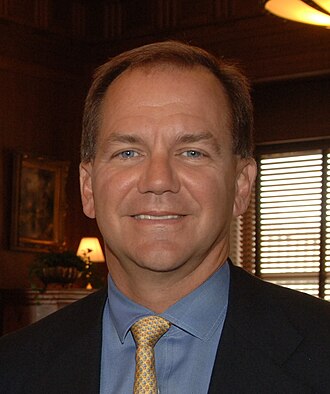
Founder and CIO, Tudor Investment Corporation
Jones said he had recently added to AI positions and put the current cycle roughly 50-60% through a typical four- to five-and-a-half-year productivity boom; judge by whether the AI-led equity rally peaks before roughly May 2028.
“We have 900 days left — within roughly 900 days AI's economic and social impact becomes irreversible, with most screen-based economic work replaced.”
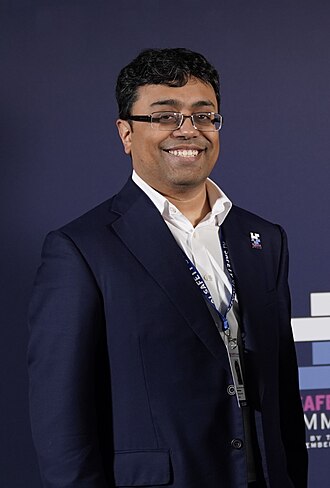
Founder of Intelligent Internet; co-founder and former CEO of Stability AI; author of 'The Last Economy'
Deadline is roughly May 2028 (900 days from the November 21, 2025 interview); resolution will turn on whether most remote/screen-based work has in fact been automated by then.
“If you are a sophomore now, you will graduate into a world with AGI in it.”

Co-founder and CEO of OpenAI
Resolves when the class of 2028 graduates in June 2028; the Daily reports Altman framed AGI as likely to arrive 'within the next few years.' Note the ceremony date is reported inconsistently by the Daily itself (Friday Feb. 13 vs. 'Saturday evening').
“By mid-2028, cognitive labor becomes economically worthless — actually negative value: humans become the dumbest entity on the team and there is no market for negative-value labor.”
Founder of Intelligent Internet; former CEO of Stability AI
Deadline is mid-2028; Mostaque has made the same ~1,000-day argument in his book 'The Last Economy' and in late-2025 podcast appearances, framing agentic 'digital twins' plus collapsing token costs as driving human cognitive labor to negative value.
“Robotics will take a little longer, but I think we'll have the ChatGPT moment in the next two to three years — a robot that doesn't need to be programmed, it learns, and it's generalized.”
Deadline is mid-2028; resolution turns on whether a general-purpose, self-learning robot achieves a broadly recognized breakthrough moment comparable to ChatGPT's.
“Our bullish view is that investors are still not fully appreciating the tidal wave of growth on the horizon from the $2 trillion of spending over the next 3 years coming from enterprise and government spending around AI technology and use cases — a once in a generation 4th Industrial Revolution — and we believe tech stocks will have a very strong second half of the year.”
DIGlobal Head of Technology Research, Wedbush Securities
The three-year spending window runs to mid-2028; the shorter-term call was borne out, as tech stocks rallied strongly in the second half of 2025.
“I believe this is going to be a trillion-dollar company in the next two to three years. There's no company that has what they have when it comes to software and use cases — price target raised from $160 to $200 on continued hyper growth demand for the company's AI product suite.”
DIManaging Director and Global Head of Technology Research, Wedbush Securities
Palantir's market cap was about $432 billion when he made the call; it would need to roughly double again by August 2028.
“#Jaytrading: put some small trades on for $WRD $PONY $LCID $RIVN recently. Thesis: consolidation is coming to the autonomous space based on the massive progress that Tesla, Waymo, and Uber are making. [He expects all four companies to be acquired within 24 months and the positions, as a group, to double in value in less than two years.]”
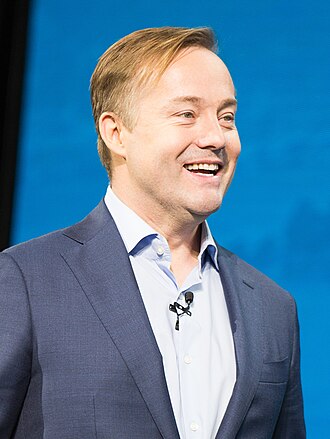
Angel investor, founder of Launch, co-host of the All-In podcast
Made in September 2026; none of WeRide, Pony.ai, Lucid or Rivian has been acquired as of the prediction date, and the 24-month window runs to September 2028.
“Over the next two years this shortage will blow off as production catches up, and memory will have a down cycle again.”
MBFounder of Scion Asset Management and author of the Cassandra Unchained Substack
Burry made the call while adding to short positions in Micron, Nebius, SOXX and Palantir, arguing the AI-era memory shortage is temporary and that rising Chinese production capacity will restore the sector's historic boom-and-bust cyclicality.
“"It's very clear that AI is going to change literally every job. Maybe there's a job in the world that AI won't change, but I haven't thought of it." Walmart plans to keep its global headcount roughly flat at about 2.1 million over the next three years, even as revenue grows, with some jobs and tasks eliminated and new ones created.”
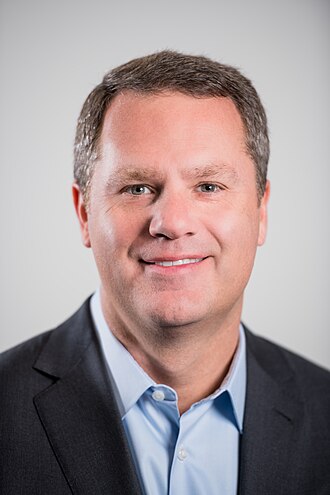
President and CEO, Walmart (largest private employer in the United States)
Walmart's global headcount was about 2.1 million when the prediction was made; the flat-headcount horizon runs to roughly late 2028 and can be checked against Walmart's annual associate counts.
“Regarding the Terafab, the Austin-based research fab is progressing quickly. We'll begin commissioning machinery in the first half of next year and, hopefully, if things go well, we'll make our first test chip — just to see if we can make any chip at all — around May or June. Our aspiration is to be making some kind of useful chip at volume around Q3 of 2028.”
Musk also said Terafab capital equipment spend through early 2028 would be 'not less than tens of billions' and likely north of $100 billion long term; first test chip is targeted for May–June 2027.
“For the 2027 fiscal year, Broadcom is looking to double AI revenue to $115 billion, with plans to double again to $230 billion in fiscal 2028; the company is on target to produce over $30 in earnings per share.”

President and CEO, Broadcom
Fiscal 2028 ends in late October 2028; LSEG consensus for FY2028 adjusted EPS at the time was $25.86, well below Tan's $30-plus target.
“We have a line of sight to medical superintelligence in the next two to three years — expert-level performance at the full range of diagnostics, alongside highly capable planning and prediction in operational clinical settings.”

CEO of Microsoft AI, leading the new MAI Superintelligence Team
Announced alongside Microsoft's 'Towards Humanist Superintelligence' essay and the MAI-DxO diagnostic orchestrator results; the companion blog post uses the looser phrase 'in the next few years.'
“By 2028, the U.S. presidential race might no longer be run by humans.”
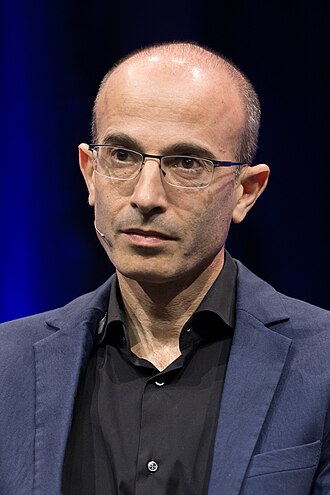
Historian and author of Sapiens, Homo Deus and Nexus; lead co-author, with Tristan Harris and Aza Raskin, of the New York Times guest essay 'You Can Have the Blue Pill or the Red Pill, and We're Out of Blue Pills'
The 2028 US presidential election has not yet taken place; AI-generated campaign content has proliferated since 2023, but campaigns to date remain run by human candidates and staff.
“It's already a bubble. I think we're going to have this repricing and a softening of the economy that happens before November 2028. The major companies will survive — it's these neocloud companies where we're going to see some breakage and bankruptcies. The only question is if it's a soft recession or something more dramatic.”
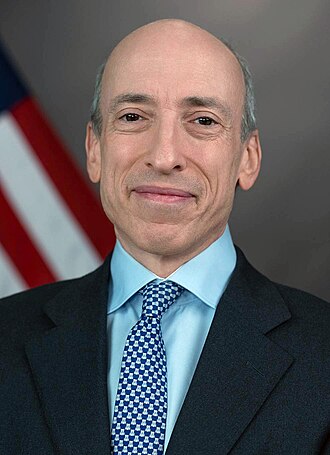
Former Chair of the U.S. Securities and Exchange Commission (2021–2025); professor at MIT Sloan
Gensler compared the AI buildout to the railroads, 1920s electrification and the 1990s internet, sizing the eventual downturn closer to the dot-com crash than to 2008; resolves on whether a US recession and AI repricing occur before Election Day, November 7, 2028.
“As the race to AGI intensifies, the national security state will get involved. The USG will wake from its slumber, and by 27/28 we'll get some form of government AGI project. No startup can handle superintelligence.”
LAFormer OpenAI Superalignment researcher; author of 'Situational Awareness: The Decade Ahead'
Deadline is end of 2028; the essay says 'by late 26/27/28 it will be underway.'
“The 2028 cluster will be 10GW — that's 10 million H100 equivalents, costing hundreds of billions of dollars.”
LAFormer OpenAI Superalignment researcher; author of 'Situational Awareness: The Decade Ahead'
Target is end of 2028.
“"As we roll out more Generative AI and agents, it should change the way our work is done. We will need fewer people doing some of the jobs that are being done today... in the next few years, we expect that this will reduce our total corporate workforce as we get efficiency gains from using AI extensively across the company."”
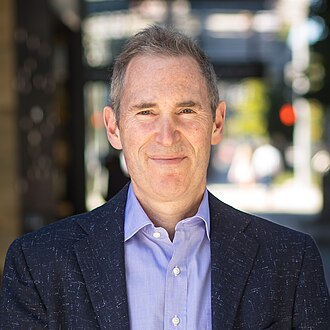
President and CEO, Amazon
Amazon announced large corporate job cuts later in 2025, but the company attributed them chiefly to bureaucracy and culture rather than AI, and the 'next few years' window runs to 2028, so the AI-attribution part remains open.
“Annual data center capital expenditure will reach $1 trillion by 2028: 'I've said before that I expect data center buildout to reach $1 trillion, and I'm fairly certain that we're going to reach that very soon' — driven by accelerated computing and the recognition that the future of software requires capital investment.”
Co-founder and CEO, NVIDIA
Resolves at the end of 2028 against industry-wide data center capex. Independent forecasters (e.g., Dell'Oro) put the $1 trillion annual mark a year later, in 2029.
“'In the Data Center alone, we expect the AI accelerator TAM will grow at more than 60% annually to $500 billion in 2028. To put that in context, this is roughly equivalent to annual sales for the entire semiconductor industry in 2023.'”
Su gave a near-identical $500 billion/2028 TAM figure at AMD's Advancing AI keynote on October 10, 2024; resolves against 2028 data center AI accelerator market size.
“Understating depreciation by extending useful life of assets artificially boosts earnings — one of the more common frauds of the modern era... Yet this is exactly what all the hyperscalers have done. By my estimates they will understate depreciation by $176 billion 2026-2028. By 2028, ORCL will overstate earnings 26.9%, META by 20.8%.”
MBFounder of Scion Asset Management ('The Big Short' investor)
Resolves against hyperscaler depreciation schedules and reported 2026-2028 earnings, in particular whether Oracle's and Meta's 2028 earnings prove overstated by roughly the quoted percentages under shorter server useful lives.
“I think there's a 50% chance that we have AGI by 2028. Now, it's just a 50% chance. I'm sure what's going to happen is we're going to get to 2029 and someone's going to say, 'Shane, you were wrong.' Come on, I said 50% chance.”
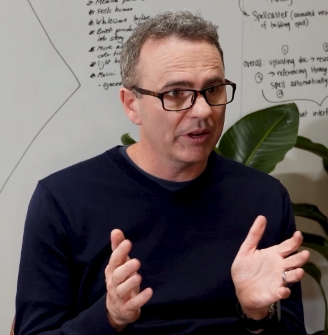
Co-founder and Chief AGI Scientist, Google DeepMind
Deadline is end of 2028. Legg has restated this 50%-by-2028 estimate consistently since first making it in the 2000s, and as of 2026 he still frames 'minimal AGI' as roughly two years out.
“Microsoft has agreed to purchase electricity from Helion's first fusion power plant, scheduled for deployment in 2028: the plant "is expected to be online by 2028 and will target power generation of 50 MW or greater after a 1-year ramp up period."”

Fusion startup led by co-founder and CEO David Kirtley; chaired and backed by Sam Altman
Site work on Orion in Chelan County, Washington began in July 2025 and Helion reaffirmed the 2028 date, but in 2026 the company removed the "producing electricity by 2028" language from its website in favor of "begin initial operations in 2028," and a Helion executive conceded at the 2026 FusionX conference that 50 MW full operation will not happen in 2028 (Axios Pro, 8 Sept 2026). Formally unresolved until the end of 2028.
“There will be no [human] programmers in five years.”
Founder and then-CEO of Stability AI
Five-year horizon from August 2023 resolves at the end of 2028; as of 2026 software development employment remains substantial, so the claim is heavily on track to fail but is not yet due.
“I think we're near guaranteed at this point to have effectively models that are capable of automating any white collar job by 2027, 2028 — or near guaranteed end of decade.”

AI researcher, Anthropic (previously Google DeepMind)
Douglas caveated that white-collar tasks are unusually susceptible to current algorithms because they can be retried on computers and have abundant internet data, unlike robotics or biology.
“My most contrarian belief: America, at some point over the next four years, will print at least one year of greater than 5% real GDP growth. I think productivity is going to go vertical because of AI and deregulation. I think there could be a world where this is the late '90s.”
GBManaging Partner and CIO, Atreides Management; All-In Podcast guest bestie
Window runs through calendar 2028; no year of >5% US real GDP growth has been recorded so far, leaving 2026-2028 to resolve it.
“I think in five years' time it [AI] may well be able to reason better than us.”

Turing Award-winning computer scientist, the "Godfather of AI"; former Google Brain researcher
Hinton made the remark to Scott Pelley after testing GPT-4 with a reasoning riddle; the five-year horizon runs to the end of 2028.
“One architecture per year, one new AI infrastructure platform every year: Blackwell Ultra in the second half of 2025; Vera Rubin — the Vera CPU with the Rubin GPU, NVLink 144 — in the second half of 2026; Rubin Ultra, NVL576, in the second half of 2027; and then Feynman in 2028.”
The first leg has held up — Blackwell Ultra (GB300) arrived in the second half of 2025, and Huang said at his CES 2026 keynote that Vera Rubin was in full production for second-half-2026 availability — but Rubin Ultra (2027) and Feynman (2028) are still ahead, and supply-chain reporting has already floated slippage of the NVL576 'Kyber' rack toward 2028.