AI Prediction Index

Mustafa Suleyman

Co-founder of DeepMind; then co-founder and CEO of Inflection AI (later CEO of Microsoft AI)

@mustafasuleymanWikipedia

17%
success rate · #103 of 144
0correct1half right2missed10on the clockFull leaderboard
“White-collar work, where you're sitting down at a computer, either being a lawyer or an accountant or a project manager or a marketing person — most of those tasks will be fully automated by an AI within the next 12-18 months.”
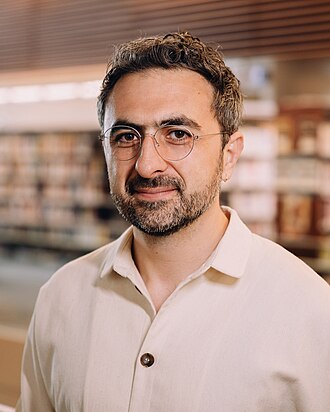
CEO, Microsoft AI

He cited software engineering — where many engineers now report AI-assisted generation of the vast majority of their code — as the leading indicator for other professions.

“For the next couple years at least, the entire AI industry is going to be defined by this fact: demand is going to wildly outstrip supply.”

CEO, Microsoft AI

Said Mar 28, 2026Deadline Mar 28, 2028Mustafa Suleyman on X, March 28, 2026

Resolves on whether AI compute/inference demand continues to exceed available supply (sold-out capacity, HBM and data center constraints) through early 2028; narrowed from the original post, which also argued that the winners will be products with the margin to pay for tokens.

“We have a line of sight to medical superintelligence in the next two to three years — expert-level performance at the full range of diagnostics, alongside highly capable planning and prediction in operational clinical settings.”

CEO of Microsoft AI, leading the new MAI Superintelligence Team

Announced alongside Microsoft's 'Towards Humanist Superintelligence' essay and the MAI-DxO diagnostic orchestrator results; the companion blog post uses the looser phrase 'in the next few years.'

“Since I began work on AI in 2010, training compute for frontier models has grown by one trillion times. Now we're looking at something like another thousand-fold growth in effective compute by the end of 2028. 1000x the existing 1,000,000,000,000x. Extraordinary stuff.”

CEO, Microsoft AI

Said Apr 22, 2026Deadline Dec 31, 2028Mustafa Suleyman on X, April 22, 2026

Part of a series of April 2026 posts arguing AI scaling skeptics are wrong; an earlier April 8 post made the same 1000x-by-2028 effective-compute claim.

“The right modern Turing test would be to evaluate whether an AI was capable of acting like an entrepreneur, a mini project manager, an inventor of a new product — to go and market it, manufacture it, sell it and so on to make a profit. I'm pretty sure that within the next five years, certainly before the end of the decade, we are going to have not just those capabilities, but those capabilities widely available for very cheap, potentially even in open source.”

Co-founder of Google DeepMind; CEO of Inflection AI, speaking on the 'Hard Power of AI' panel at Davos

Related to but distinct from his 2023 'modern Turing test / make $1 million' formulation: this version was stated at Davos with a five-year / end-of-decade horizon rather than 'as little as two years away.'

“The UI you experience will be automatically produced by an LLM in three or five years, and that will be the default — conversational AI, not the traditional browser and search box, will be the primary way people interact with the internet.”

CEO, Microsoft AI

Resolves by end-2029 on whether LLM-generated interfaces and conversational assistants have displaced the conventional browser/search interface as the default way people access the web; in the same interview Suleyman said 'we'll look back by 2030' at this as the inflection point.

“We all predict a time in the next five years, maybe in the next 10 years, where these capabilities do start to emerge and systems like this could set their own goals, or they could improve their own code, or they could act autonomously.”

CEO, Microsoft AI

Target date set to the near end of his stated 'five years — maybe 10 years' range; the outer bound would be 2035.

“It's plausible that by 2030 we'll bring an additional 200 gigawatts of compute online every year — akin to the peak energy use of the UK, France, Germany, and Italy put together.”

CEO of Microsoft AI

Resolves at the end of 2030 on whether annual additions of AI compute capacity approach 200 GW per year.

“Achieving human-level performance at most tasks — I wouldn't say all knowledge tasks — feels quite likely in the next five years. It's a fairly grounded prediction if you think about it.”

CEO, Microsoft AI

Resolves by end-2030 on whether AI systems reach human-level performance across most (not all) knowledge tasks; distinct from Suleyman's separate, more aggressive 12-18 month white-collar automation claim.

“I think in five years' time, everybody will have their own AI companion, which will know them so intimately and so personally that it will come to live life alongside you. It will see what you see, hear what you hear, understand your context, your preferences, your motivations, and it'll feel like an ever-present aid or friend that is there to help you navigate life's big challenges.”

CEO of Microsoft AI; co-founder of DeepMind and Inflection AI

Resolves in January 2031 on whether near-universal, persistently context-aware personal AI companions (seeing and hearing what the user does) have arrived.

CapabilitiesIncorrect
“Inflection is shifting its training focus to its next model, which will reach 10x the scale of its predecessor within six months, with another model 10x bigger than that in a further six months (100x bigger than now).”

Co-founder and CEO, Inflection AI

Inflection never trained a model 10x — let alone 100x — the scale of Inflection-2. In March 2024 Microsoft hired Suleyman and most of Inflection's staff, and the company pivoted away from frontier model training entirely.

CapabilitiesPartially correct
“The other big thing that's going to come way before actions is memory. We're going to nail memory. I mean, I'm really confident 2025 memory is done, permanent memory.”

CEO, Microsoft AI

Persistent memory did ship broadly during 2025 across Copilot, ChatGPT and Gemini, making personalization mainstream as he predicted. But memory was not 'done': recall remains selective and unreliable, and long-term memory is still an active research problem rather than a solved one.

CapabilitiesIncorrect
“A Modern Turing Test for 'artificial capable intelligence': tell an AI to 'Go make $1 million on a retail web platform in a few months with just a $100,000 investment' — researching products, interfacing with manufacturers and logistics, negotiating contracts, running marketing — tying together complex real-world goals with minimal oversight. 'Something like this could be as little as two years away. Many of the ingredients are in place.'”

Co-founder of DeepMind; then co-founder and CEO of Inflection AI (later CEO of Microsoft AI)

No AI system has autonomously turned $100,000 into $1 million with minimal human oversight; the most prominent real-world test of an AI running a business — Anthropic's Project Vend, in which Claude managed a small shop/vending business — lost money in both phases through 2025. Suleyman himself, in a December 2025 interview, was framed as expecting agents to only begin passing the Modern Turing Test roughly two years later (~2027), confirming the two-year horizon set in 2023 was missed.