Cures, diagnostics, and drug-discovery promises with dates attached — including the decade claims, on the clock.
“Isomorphic Labs expects to have its first clinical trials by the end of 2026.”
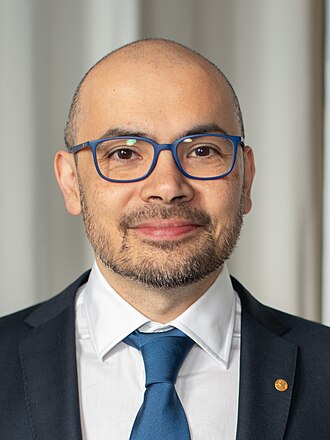
Founder and CEO, Isomorphic Labs; CEO, Google DeepMind; 2024 Nobel laureate in Chemistry
This is the revised version of Hassabis's missed end-2025 target; as of September 2026 no Isomorphic Labs trial start has been announced, and the deadline runs to 31 December 2026.
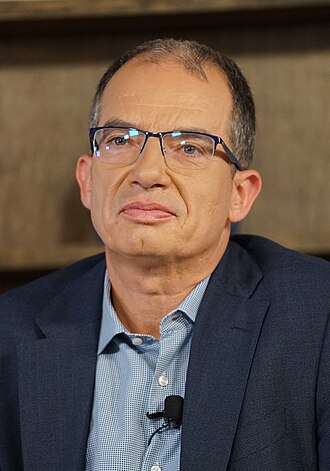
“In the quarter, we committed to eliminating, by the end of this year [2026], 30% of prior authorization volume and nearly two-thirds of prior authorization requirements for pediatric care... AI is both an enabler and accelerant to this effort.”
TNCEO, UnitedHealthcare (UnitedHealth Group's insurance business)
Builds on UnitedHealthcare's May 5, 2026 announcement to eliminate an additional 30% of remaining prior authorizations and its May 29, 2026 pledge to remove nearly two-thirds of pediatric prior authorization requirements by year-end; first tranche of reductions took effect October 1, 2026.
“In the next couple of years, I'd like to see that [the roughly ten years and billions of dollars it takes to design one drug] cut down in a matter of months, instead of years. That's what I think is possible. Perhaps even faster.”
CEO, Google DeepMind and Isomorphic Labs; 2024 Nobel laureate in Chemistry
Resolves against demonstrated design-to-candidate timelines at Isomorphic Labs and peers by end-2027; Isomorphic has not yet started a clinical trial.
“We have a line of sight to medical superintelligence in the next two to three years — expert-level performance at the full range of diagnostics, alongside highly capable planning and prediction in operational clinical settings.”

CEO of Microsoft AI, leading the new MAI Superintelligence Team
Announced alongside Microsoft's 'Towards Humanist Superintelligence' essay and the MAI-DxO diagnostic orchestrator results; the companion blog post uses the looser phrase 'in the next few years.'
“With the help of AI, scientists will likely 'understand most diseases' in the next three to five years — 'a first for humans on the planet.' If you understand the disease, you will find a way to go fix it.”
Deadline is the outer end of Bancel's three-to-five-year window (April 2029); resolution will turn on whether AI-driven biology delivers fundamental mechanistic understanding of 'most diseases' by then.
“Even with only roughly 10, 15% of the electrodes working with Noland, our first patient, we were able to achieve twice the world record [in bits per second]. So I think we'll start vastly exceeding the world record by orders of magnitude in the years to come — start getting to, I don't know, 100 bits per second, a thousand. Maybe five years from now, we might be at a megabit, faster than any human could possibly communicate by typing or speaking.”
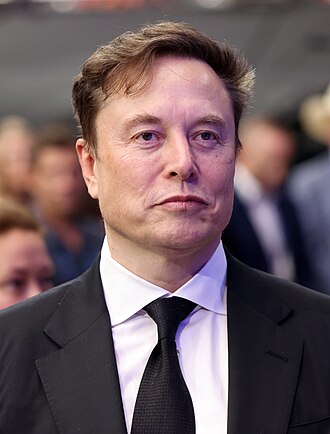
Founder of Neuralink; CEO of Tesla, SpaceX and xAI
Hedged ('maybe... might'), but numerically concrete: a ~1,000,000 bits-per-second brain-computer interface by August 2029, versus the single-digit-to-low-tens bps demonstrated at the time of the claim.
“Neuralink is working super hard to ensure implant safety & is in close communication with the FDA. If things go well, we might be able to do initial human trials later this year.”
No human trials began in 2021. The FDA rejected Neuralink's initial application in 2022, approved human trials only in May 2023, and the first human implant took place in January 2024.
“We hope to have this in our first humans — which will be people that have severe spinal cord injuries like tetraplegics, quadriplegics — next year, pending FDA approval.”
Neuralink implanted no human in 2022; its FDA application was rejected that year over safety concerns. Approval came in May 2023 and the first human implant in January 2024.
“We're not testing people yet, but I think it won't be too long. We may be able to implant a neural link in less than a year in a person, I think.”
Neuralink implanted no human by May 2021; the device was only demonstrated in a pig (August 2020) and a monkey (2021). The first human implant came on January 29, 2024, nearly four years later.
“Neuralink wants to have its first human patient equipped with the technology before the end of 2020 — the company is looking to start trials on humans next year, pending FDA approval.”
No human was implanted in 2020. Neuralink did not even seek FDA approval until 2022 (initially rejected), received approval in May 2023, opened recruitment in September 2023, and announced its first human implant on January 29, 2024.
“Paraplegic and some quadriplegic persons routinely walk and climb stairs through a combination of computer-controlled nerve stimulation and exoskeletal robotic devices.”

Inventor and futurist, author of The Age of Spiritual Machines
Powered exoskeletons existed in 2019 but were rare, costly and mostly confined to rehabilitation clinics; paraplegics overwhelmingly still used wheelchairs, and no combined nerve-stimulation/exoskeleton device was in routine daily use.
“Human life expectancy is now over one hundred years.”
Inventor and futurist, author of The Age of Spiritual Machines
Life expectancy in 2019 was roughly 78–79 years in the United States and about 73 years globally — nowhere near 100.