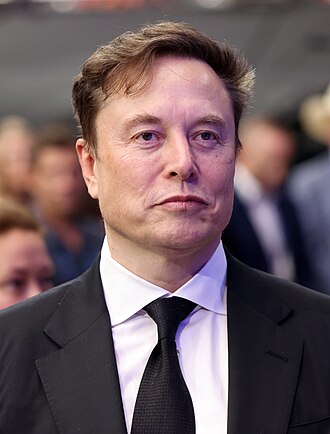
“Powerful AI — smarter than a Nobel Prize winner across most relevant fields — could come as early as 2026.”
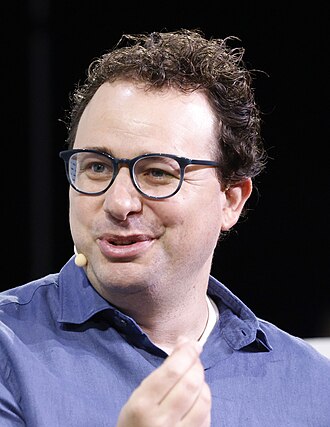
CEO, Anthropic
Framed explicitly as an 'as early as' estimate, not a commitment.
Timelines for human-level AI and beyond, from the 1958 originals to this year's lab leaders — each with a deadline and a grade.
133 tracked · 16 graded · 41% came true
“Powerful AI — smarter than a Nobel Prize winner across most relevant fields — could come as early as 2026.”
CEO, Anthropic
Framed explicitly as an 'as early as' estimate, not a commitment.
“Grok 5 will be AGI or something indistinguishable from AGI.”
Target date is an editorial inference from xAI's own Grok 5 schedule (training start September 2025, release originally signalled for end-2025/early-2026). As of September 2026 Grok 5 has still not been released — it slipped from Q1 to Q2 2026 and remains in training — so the claim cannot yet be judged.
“I think we're quite close to digital superintelligence. It may happen this year, and if it doesn't happen this year, next year for sure. Digital superintelligence, defined as smarter than any human at anything.”
Deadline is end of 2026; 2025 passed with no system smarter than any human at anything, so resolution rests on the remainder of 2026.
“(near) Full automation of AI R&D by Dec 31, 2026: 10%. My operationalization is: for whichever AI company is in the lead as of Dec 31, 2026, if you fired all its members of technical staff, its rate of technical progress on relevant benchmarks would be slowed down by less than 25%.”
Rescoring in August 2026, Cotra said capability milestones were arriving 30–50% faster than she forecast but declined to mechanically raise this probability.
“Top-human-expert dominating AI by the end of 2026: 5%. This means an AI system that achieves ambitious long-term goals in any domain better than the world's leading expert in that domain, using a comparable amount of time and cost. The main pathway I see to this is automation of AI R&D sometime in mid-2026 → rapid intelligence explosion → TEDAI by end of year.”
Cotra restated this ~5% figure when rescoring her forecasts in August 2026.
“Self-sufficient AI by the end of 2026: 2.5%. By this I mean a set of AI systems, together with enabling physical infrastructure, such that if humans all died then those AIs could 'survive' and continuously grow their own population indefinitely (including repairing and maintaining the physical substrate they run on).”
Cotra restated this ~2.5% figure when rescoring her forecasts in August 2026.
“We think that a significant advance can be made in one or more of these problems [making machines use language, form abstractions and concepts, solve kinds of problems now reserved for humans, and improve themselves] if a carefully selected group of scientists work on it together for a summer.”
Assistant Professor of Mathematics, Dartmouth College; lead author of the Dartmouth AI proposal with Marvin Minsky, Nathaniel Rochester and Claude Shannon
The 1956 workshop founded the field and featured Newell and Simon's Logic Theorist, which proved theorems from Principia Mathematica, but that program predated the summer and participants largely worked separately; the listed problems of language, abstraction and self-improvement took decades rather than one summer.
“It is more probable than not that, within the twentieth century, an ultraintelligent machine will be built and that it will be the last invention that man need make, since it will lead to an 'intelligence explosion.'”
No machine capable of far surpassing all the intellectual activities of any man was built by the end of the twentieth century, and no intelligence explosion occurred; the AI systems of 2000 were narrow and the term 'ultraintelligent machine' remained speculative.
“Within a generation, I am convinced, few compartments of intellect will remain outside the machine's realm — the problems of creating 'artificial intelligence' will be substantially solved.”
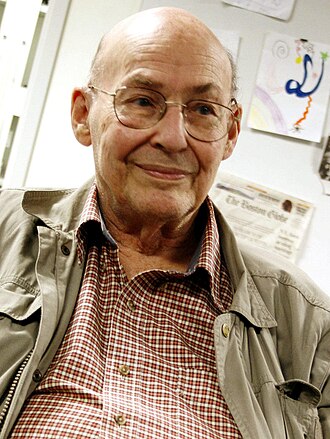
Head of the MIT Artificial Intelligence Laboratory; author of 'Computation: Finite and Infinite Machines'
A generation on, AI was nowhere near solved: the field had passed through two AI winters, and the best systems of the 1990s were narrow (Deep Blue's 1997 chess win being the showcase). Minsky himself conceded by 1982 that 'the AI problem is one of the hardest science has ever undertaken.'
“The dangers of superintelligence are even worse than I projected five years ago: it'll only be 2-3 years "before we get outsmarted," and "we should expect the machines to take control."”
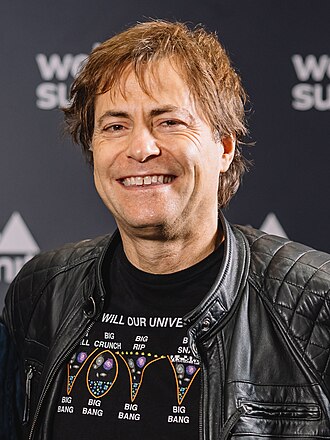
Professor of Physics, MIT; President of the Future of Life Institute
The outer edge of Tegmark's 2–3 year window (October 2026) has passed with no superintelligence and, emphatically, no machine takeover: frontier systems as of late 2026 (Gemini 3.x, GPT-5.x, Claude Opus 4.x, Grok 4.x) remain narrow-but-powerful assistants under human operation, and no lab or government has declared humanity 'outsmarted' in the general sense Tegmark described. The 'we should expect the machines to take control' element clearly did not occur by the deadline.
“I'd also like to add to this prediction that I expect to see an impressive proto-AGI within the next 8 years. By this I mean a system with basic vision, basic sound processing, basic movement control, and basic language abilities, with all of these things being essentially learnt rather than preprogrammed. It will also be able to solve a range of simple problems, including novel ones.”
Co-founder, DeepMind Technologies
By the end of 2019 impressive learned systems existed separately for vision, speech, control and language (e.g. GPT-2, AlphaStar), but no single system combined all four modalities with novel problem solving; the PredictionBook entry tracking this claim was judged wrong on 31 December 2019. Integrated multimodal agents such as Gato and GPT-4V only arrived in 2022–2023.
“In 2008 I bet $10k against Anna Salamon's $100 that AI would not pass the Turing test by 2018. I was pretty dead certain it couldn't happen that soon. In fact, we agreed on a strict version of the Turing test that even now, AI can't pass.”
No system passed the strict Turing test the two agreed on by the end of 2018 — Reeves notes that as of 2025 AI still cannot pass it — so Reeves won the wager.