AI Prediction Index

Nick Bostrom

Philosopher and Director, Future of Humanity Institute, University of Oxford; co-author with Vincent C. Müller of 'Future Progress in Artificial Intelligence: A Survey of Expert Opinion'

nickbostrom.comWikipedia

100%
success rate · #8 of 144
2correct0half right0missed4on the clockFull leaderboard
“This paper outlines the case for believing that we will have superhuman artificial intelligence within the first third of the next [i.e. this] century.”
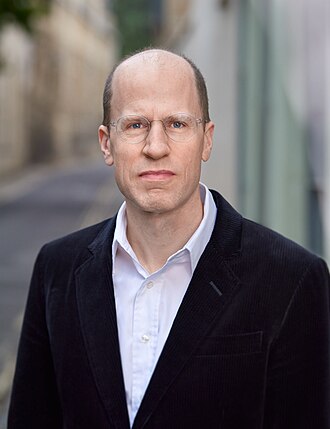
Philosopher, University of Oxford; author of Superintelligence: Paths, Dangers, Strategies

Deadline is the end of the first third of the 21st century (~2033); no superhuman AI exists as of early 2026, though Bostrom's later postscripts note no major AGI breakthrough had occurred.

“The median estimate of respondents was for a one in two chance that high-level machine intelligence — a machine that can carry out most human professions at least as well as a typical human — will be developed around 2040–2050.”

Philosopher and Director, Future of Humanity Institute, University of Oxford; co-author with Vincent C. Müller of 'Future Progress in Artificial Intelligence: A Survey of Expert Opinion'

Survey of 170 respondents conducted in 2012/2013 across four expert groups; the all-group median for a 50% probability of HLMI was 2040.

“The median estimate rises to a nine in ten chance that high-level machine intelligence will have been developed by 2075.”

Philosopher and Director, Future of Humanity Institute, University of Oxford; co-author with Vincent C. Müller of 'Future Progress in Artificial Intelligence: A Survey of Expert Opinion'

The median respondent date for a 90% probability of HLMI was 2075.

“In this century probably, we will be building this hugely consequential thing which is the first general intelligence that will be smarter than humans.”

Professor, University of Oxford; founding Director, Future of Humanity Institute

Bostrom frames machine superintelligence as probable within this century and as 'maybe the most important thing that our species will ever have done.'

“Depending on degree of optimization assumed, human-level intelligence probably requires between 10^14 and 10^17 ops... If Moore's law continues to hold then the lower bound will be reached sometime between 2004 and 2008, and the upper bound between 2015 and 2024.”

Philosopher, University of Oxford; author of Superintelligence: Paths, Dangers, Strategies

Both hardware windows held: leading supercomputers passed 10^14 ops in 2004–2005 (IBM Blue Gene/L, 70.7 TFLOPS in Nov 2004 rising past 100 TFLOPS in 2005) and passed 10^17 ops in 2016–2018 (Sunway TaihuLight at 93 PFLOPS Linpack/125 PFLOPS peak in 2016; Summit at 122+ PFLOPS in 2018), inside the predicted 2004–2008 and 2015–2024 ranges. The separate question of whether that hardware yields human-level intelligence is not part of this claim.

“Surveyed AI experts gave a median date of 2022 for a 10% probability of high-level machine intelligence — a machine that can carry out most human professions at least as well as a typical human.”

Philosopher and Director, Future of Humanity Institute, University of Oxford; co-author with Vincent C. Müller of 'Future Progress in Artificial Intelligence: A Survey of Expert Opinion'

No system by the end of 2022 could carry out most human professions at least as well as a typical human, so the surveyed experts' low (10%) probability for that date was borne out — the 90% 'not yet' side was right.