AI Prediction Index

Herbert Simon

Professor at Carnegie Institute of Technology and RAND Corporation; co-creator of the Logic Theorist

13%
success rate · #113 of 159
0correct1half right3missed0on the clockFull leaderboard
CapabilitiesIncorrect
“That within ten years a digital computer will be the world's chess champion, unless the rules bar it from competition.”
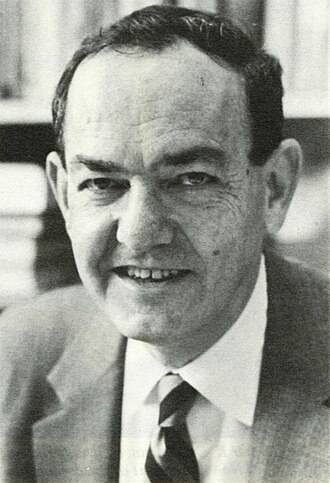
Professor at Carnegie Institute of Technology and RAND Corporation; co-creator of the Logic Theorist

Chess programs in the late 1960s played only weak amateur chess — a leading program famously lost to a ten-year-old in 1966. A computer did not defeat a reigning world champion until Deep Blue beat Garry Kasparov in 1997, roughly 30 years late, and no machine has ever held the world championship title.

CapabilitiesIncorrect
“That within ten years a digital computer will discover and prove an important new mathematical theorem.”

Professor at Carnegie Institute of Technology and RAND Corporation; co-creator of the Logic Theorist

No computer discovered and proved an important new theorem in the ten-year window; contemporaries such as Hubert Dreyfus noted in the mid-1960s that the field was still far from it. The landmark computer-assisted results came much later — the four colour theorem in 1976 and the Robbins conjecture in 1996.

CapabilitiesIncorrect
“That within ten years a digital computer will write music that will be accepted by critics as possessing considerable aesthetic value.”

Professor at Carnegie Institute of Technology and RAND Corporation; co-creator of the Logic Theorist

Algorithmic composition existed before and during the window (Hiller and Isaacson's Illiac Suite, 1957; Computer Cantata, 1963), but it was received as a technical curiosity rather than as work critics judged to possess considerable aesthetic value, and no computer-composed piece achieved such standing by the late 1960s.

CapabilitiesPartially correct
“That within ten years most theories in psychology will take the form of computer programs, or of qualitative statements about the characteristics of computer programs.”

Professor at Carnegie Institute of Technology and RAND Corporation; co-creator of the Logic Theorist

Information-processing models did become an influential way of theorising in the cognitive revolution that Newell and Simon themselves led, culminating in Human Problem Solving (1972). But the great majority of psychological theories — in clinical, social, developmental and personality psychology — were never cast as computer programs within the ten-year window or since.